Store OperationsBusiness IntelligenceCustomer StoriesIndustry Events Traffic AnalyticsInsights
Africa's Retail Renaissance Takes Hold With TFG
28 May 2026 · Nirvani Dhevcharran, CTO: Platforms and Operations
TFG started more than a hundred years ago as a single apparel store in South Africa. Today The Foschini Group runs 39 brands and more than 4,900 outlets on five continents, with close to 40 million loyalty members and roughly 50,000 employees. At the 13th Annual Executive Forum, Nirvani Dhevcharran, CTO: Platforms and Operations, makes the case that African retail belongs at the table, and shows what that looks like from the inside.
She opens with a pragmatic view of AI. Microsoft Copilot now helps TFG's HR team shortlist candidates within South Africa's employment equity rules, while a personalised-statement pilot that took significant data to build ran for three months and produced zero upsell. Her lesson: every use case has to carry real business value. She then walks through TFG's BOLTS strategy (Build Out, Optimise, Leverage, Transform, Sustain) and where RetailNext fits within it: the Leverage pillar, which is about mining the data the group already holds.
The rest of the session covers TFG's move to RetailNext after a previous counting solution left the business with no confidence in its data. During the proof of concept, store colleagues stood at the door counting shoppers by hand to compare the systems. RetailNext now covers almost two-thirds of the estate and is integrated with TFG's turnover and IT service management systems. Nirvani shares how footfall shapes conversion targets brand by brand, a holiday-town homeware store measured on footfall alone, the cannibalization a new JD Sports store revealed in one mall, and workforce plans built on footfall rather than turnover. She closes with the lessons learned, putting RetailNext data in front of store colleagues, and an early test of RetailNext's AI in Afrikaans, Xhosa, and Zulu.
Key takeaways.
- Every AI use case needs real business value. TFG piloted personalised imagery on customer statements, matched to what each shopper had bought. It took significant data to build, ran for three months, and produced zero upsell. Copilot-assisted shortlisting, which handles a thousand applicants for ten positions, is the kind of use case that pays its way.
- Accuracy is what earns trust. TFG's previous counting solution left the business with no confidence in its data. During the RetailNext proof of concept, store colleagues stood at the door counting shoppers by hand to compare the numbers before they believed them.
- Conversion means something different in every brand. A value store needs little engagement with shoppers, while jewellery and luxury clothing shoppers expect personal service, so conversion targets are set brand by brand. In one holiday-town homeware store, footfall is the only number TFG tracks.
- Footfall shows what turnover hides. When a JD Sports store opened in one of TFG's malls, footfall data showed it was cannibalizing another TFG store with an overlapping product set, which turnover alone would not have explained.
- Plan staffing on footfall, not turnover. TFG's store formats vary too much for small, medium, and large templates. Segmenting each store type by footfall lets TFG schedule by time of day, month, and year, and its workforce management vendor had only ever planned on turnover before.
- Clean data takes configuration and housekeeping. Trading hours that were never configured, staff walking in and out of the entrance on quiet days, and mall stores with doors on both sides all skewed counts until they were addressed.
- Language is the test for AI in the store. South Africa has 11 official languages and store colleagues speak in their own. TFG tried RetailNext's AI in Afrikaans, Xhosa, and Zulu, which Nirvani calls a potential game changer for rolling data out to the shop floor.
Transcript
-
Read the Transcript
[Opening montage from the Executive Forum sizzle reel.]
I'm excited about this because this is where the rubber meets the road. Where are the different types of AI? What could the benefits be, so people don't view it as "it's going to replace me"? Trying to build a business with a brand versus building a brand and letting the business follow. He called me about the idea of UNTUCKit. He's like, yeah. You ever wear your shirts untucked?
Nirvani Dhevcharran: I'm going to talk to you about the organisation I work for, TFG, The Foschini Group. We started over a hundred years ago as a single store selling just apparel. And then an American came to South Africa and decided to help grow our footprint. In the 1940s, we listed on the South African stock exchange, the Johannesburg Stock Exchange. And since then, we've just been growing from strength to strength. I'll talk about the number of stores just now.
Not only are we headquartered in South Africa, but we do have a global footprint. I'll put up some of our brands just now, and I'm sure some of you can actually relate to them, because we have a presence in the UK and in Australia, with operations that work out of there.
I was going to talk a bit about what we've done on digital transformation, but in light of the AI conversation that's just happened, I thought it might be prudent to talk about some of our examples. We're using AI quite a lot in our environment, in various areas. Within the HR team, they're using good old Microsoft Copilot to help with shortlisting of candidates. We have a whole lot of laws and regulations around equity and the way we appoint people, because of us coming out of the apartheid era. So there are a lot of nuances that we need to be aware of when we're using AI for shortlisting. But when you've got a thousand applicants and 10 positions, it's making a phenomenal difference.
And a really interesting use case, talking about the sandbox that someone spoke about earlier on: when you get your statements from your clothing store or any one of them, they have a stock standard image on the side. Everybody gets the same thing. And then we thought, maybe it'll be cool if we say we know the profile of our customer. So if Nirvani's bought this dress, in her next statement we'll try and do an upsell, and we'll send a picture of an Indian female in a red dress with red shoes. And if Sergio's bought that white suit from our luxury brand store, his statement is going to have a shirt that could go with that white suit. And we thought it was a fabulous idea. We ran it as a pilot for three months: zero upsell. And it was a wonderful use case. The amount of data we had to put in it was significant, but we had nothing to show for it. So it's so important to make sure that your use cases have true business value. I can talk a little bit more about that later on if we have some time.
But this is really what our footprint looks like. Over 39 brands. We will continue to be a brand business; we don't have plans of consolidating into one. 4,900-odd stores, the bulk of which are in South Africa, and then a whole lot in Australia and the UK. And we also have a presence, as I said, in North America, on the East Coast, as well as in Mexico. And we also have a lot of concession stores. So really a large environment.
I'm responsible for getting platform infrastructure into stores and head office. Last year, we equipped just over 110 stores. So bricks and mortar is here to stay. I'll talk about our omnichannel, our online experience, just now as well. South Africa is very much a mall nation. People love to go into stores and touch and feel their product.
So over 100 stores last year. We've also grown through acquisition. And I think my biggest horror story was coming out of COVID: we did an acquisition for one of our value brands, and we acquired 512 stores, 432 of them viable, and we were given six months to get them all onto the TFG platforms, because everything's got to run on TFG platforms. No other platform works. So it's quite intense. We have quite a growth strategy. But we're also constantly doing feasibility analysis to make sure our stores are still viable.
We did a whole exercise around ensuring we are still relevant. We had a very wordy vision, mission, purpose, and values. And I think Emily gave a really good example about omnichannel. That's truly what we believe in from a vision point of view. What we wanted was something easy and simple. Our staff can relate to it. Our customers feel that they are front and centre of what we are doing, and that's worked really well for us.
In terms of our strategy, this is what we're defined by. It's called BOLTS. The B is Build Out, and Alexei actually spoke about this: making sure your brand is entrenched and embedded. We have over 39 brands, and I'll still show you those. We need to make sure each of those brands makes a difference. Our brands range across a variety of products. It's a very diverse portfolio. We have menswear, ladieswear, jewellery, we have homeware, and of course our online platform. So it gives us quite a broad spectrum. And what's also quite interesting, to understand why the implementation of RetailNext was so important for us, is that the footprint for each of those stores is very different. And we target different segments of the market as well. We've got value brands, luxury brands, and then brands in between as well. So that's quite something.
On the Optimise side, that's really what Monica was speaking about this morning: optimising your supply chain. We moved from a push to a pull model with our omnichannel experience. If you bought seven products from us, they were coming in seven packages from all around South Africa. Needless to say, that was a really expensive exercise. We streamlined all of that, so that's working really well for us.
The L, Leverage, is around all our data, our assets, and our people. And this is exactly where RetailNext fits in, into that data component. We have loads of data. We've been around for a long time, and we really need to make sure we can mine that data. And I'll talk a little bit about that.
Transform is really ensuring that our organisation is working in a true omnichannel environment. Having these multiple brands also meant that the brands wanted to retain their identity, but still have consistent processes across all of them, which is really difficult. So that's been quite a challenge.
And Sustain, that's around sustainability. I mentioned earlier on to Alexei that we could actually have a whole conversation around sustainability. We're a listed company, so we do ESG reporting. But I'm very passionate about sustainability. I own our OKRs for AI, for IT sustainability, which is more than just printing less and ensuring that you dispose of your electronic equipment ethically. There's a whole exercise around that. And I do a whole thing around using AI: what does that mean from a sustainability point of view, with the ESG lens on? That's a really interesting conversation, and I could go on for a long time.
So, just some of the stats. Bash is our online platform. Until three years ago, almost each of those 39 brands had its own website and its own customer experience, which was pretty much a nightmare. By introducing Bash, we got two really good guys that came in and set up the environment, and you'll see we've had 8 million downloads, so that's really good for us.
Another really interesting stat is that we've got close to 40 million loyalty members. So we have a very good loyalty programme. Having 40 million customers signed up is quite significant. But what's even more important and exciting is that we have won global awards for the analytics that we've done using that data, using AI and ML. Over the last three years, we've got awards out of Dubai, and I think the latest came out of New York as well. So it's really credible in terms of what we've been doing in that space.
Another interesting fact on this slide: more than 80% of our product is locally made. Pre-COVID, we probably manufactured 20 to 30%. COVID hit, and we could get no product from the East. Most of our product came from the East. With the war now, we had a ship that was stuck, and we couldn't get stock for one of our brands. We still haven't received the stock we had ordered. So it's really important that we can equip ourselves and that we are sustainable locally. So we have almost this whole vertical. When I talk of manufacturing, clearly it's a lot around apparel. But we started something two years ago, went to market last year, and it's been very successful: on the jewellery side of things, we've been doing lab-grown diamonds, and that's been growing very well. If you don't know how to tell the difference, it's really difficult. But it's been a really good seller for us.
These are the brands that we have. As you can see, it's a large number of brands. South Africa is bringing in the bulk of our revenue, as one would expect. Australia is second, and then the UK. We acquired White Stuff about eighteen months ago in the UK, and that was a really good acquisition for us, because Phase Eight is not doing so great any more in the UK. It's a very high-end store and it's not doing so well now.
In the middle, in the South Africa block, you'll see JD. Now, that's been a really interesting partnership for us. We partnered with them probably about two years ago. Their demands are really high. We've opened eight stores with them in South Africa, and kitting those stores out... There's the engagement they have with Nike, and we had our own engagement with Nike, and then JD's engagement with Nike is just another level. That's a nice, interesting discussion. Somebody spoke earlier on about making sure you have the right brand in malls that draws customers in. Getting JD into some of those malls has really helped the footfall in there as well.
Our turnover was $3.3 billion last year. And as you can see, a large number of employees. So much so that in the middle block, there's actually an error in this article. It's shown as us being the seventh largest employer in Africa. We're actually the sixth. If you can read the numbers between six and seven, we're actually sixth. But that really just shows the growth that we have and our contribution to the economy.
And because we have such a large footprint and so many people, we have the ability... I assume it's the case in the US as well, I don't know to what extent here, with Shein and Temu coming in. They have really impacted our market. But we've been able to have conversations directly with the Department of Trade and Industry to say, how do we make sure that they don't take too much of our market share? Sure, we understand the cost and all of that. But because of where we sit and the amount of employment we have, we've been able to have those conversations and influence some of the policies that have been made.
And then our claim to fame, on the left-hand side: our president does a State of the Nation Address every year, and in 2022, we dressed him. That suit was handmade for him, as was the shirt. And he did a plug for us when he was doing the State of the Nation Address, which was cool.
Okay. Just some of our use cases: customer conversion, workforce management, and business initiatives. Those are some of the big things. I'm not going to talk too much about customer conversion; I want to talk about two use cases there. But before I talk about those two, because of our different, diverse brands, our customer conversion is different for each of the brands. We have a value stack where there's not much engagement needed with customers when they walk in. And then we have jewellery and luxury clothing, where you do expect the personalised treatment. So depending on what it is, our customer conversion could be very low on the jewellery side and the luxury brands, and much higher on the other side. That's something that we track quite a lot, and it's becoming a KPI for our store colleagues as well.
Interestingly, Oriol told me... I've been with TFG for seven years, and Oriol shared an email with me the other night that said he had started engaging with TFG in 2016, and we did not go for RetailNext then. We only went with it three years ago. We had gone with another solution, which I'm not going to name, but it gave us a lot of problems in terms of accuracy of data, and there was really no confidence in the product. So when we did a POC with RetailNext, our store colleagues didn't believe the data we were getting, to the extent that they actually stood at the door physically counting people and comparing it to what RetailNext said and what the old system was saying.
So good stories came out of that, because RetailNext has now been rolled out. We've rolled it out to almost two-thirds of our environment. We've got integrations built in with our turnover systems, as well as single sign-on, and with our IT service management. So if any of those devices are faulty, there's a proactive call logged with the system, and then we can attend to that.
The two examples on the footfall data. The first is one where we actually don't even look at customer conversion; we're only looking at footfall. We've opened one of our luxury homeware stores in a holiday town called Hermanus, which is near Cape Town. We don't expect our customers to be shopping for bedding when they're on holiday, but we know they have the time to browse. And if they're going to be spending a lot of money on bedding, that's the perfect time. That's actually been working so well for us. We do have the capability to sell in the store, but it's really more about attracting customers into the store and making sure they have the time to look at the product and understand it, and the store colleagues in those stores are really knowledgeable about the product. So in that store, all we track is footfall. We don't worry that much about customer conversion.
The other thing we do with customer conversion is in JD Sports. When we had JD Sports start up in one of our malls, we found that it actually cannibalized one of our other stores. That was quite a trade-off. We hadn't expected that, but there was obviously an overlap in the product set, and we needed to refocus and look at how we did things differently. So some very interesting stats come out of that. But suffice to say, what the head of retail operations says is that if he only had one KPI, it would be customer conversion. And he never had that before. The amount of manual work he had to do was quite significant.
On workforce management: here again, because of the diverse types of brands, the number of store colleagues in stores varies. It's not one size fits all. It's not just small, medium, large. So using RetailNext has actually helped us segment each store type to ensure we can plan properly. And when we told the vendor of the tool we use for workforce management that we wanted to use footfall, they said it was the first time they were using it. All they'd ever used before was turnover. So that's been quite interesting and nice data for us as well. Our head of business operations for workforce management says foot counters are the cornerstone of what she does. It has truly changed the way she can structure the number of people working in the store, based on how busy the store is, the time of the month, and the time of the year, which makes a huge difference for us.
Project Vela comes to the point that Alexei mentioned this morning around using AI to take away the admin work of store colleagues. We had a lot of store admin work happening. Vela is an African word, so I had to put something in there, which means to emerge or to rise. We've reorganized our retail operations quite significantly. Store colleagues now have more time to focus on the customer, and they're going to be directly measured on customer conversion. So that's going to be quite something for us to track going forward.
Some of the lessons learned. Our working hours were not configured. We had started off with really bad data from this horrible system. Then we got RetailNext in and figured out this thing was working, and then realised that something still wasn't right. And I think it was Jacobo who actually helped us figure out that our working hours were not configured. So that was an easy fix, and we got that sorted out. We're still getting our staff into using the data, and they still influence it: they loiter around the entrance of the stores, walking in and out, especially when the store's not busy, so that's influencing our counts, and we need to do something about that. And in our larger malls, we sometimes have stores with doors on either side, and one can walk through from one entrance and out the other to get to the rest of the mall. And we're counting those as customers, so that's something we're going to need to look at.
Just some next steps for us. With Project Vela, we're going to roll out a lot more RetailNext data to our store colleagues. It's been held at the level above them before this. And now that data is flowing from our turnover system into the RetailNext portal, store colleagues can directly see what's happening there.
And then I'll talk about the AI capability. We had a nice demo last week. Jacobo and Oriol showed us the AI tool. What was really interesting is that South Africa has 11 official languages. So just for the hell of it, we tried three of them. We tried Afrikaans, Xhosa, and Zulu, and it seemingly translated all of them very well. So we'll be testing the other capabilities. But if we're going to be rolling out to our store colleagues, they do talk in their native tongue. This is something that we don't have with any of our other AI tools, and we think that's going to be a game changer for us. So we're looking to see how that pans out.
And that's me.
Featured Speakers
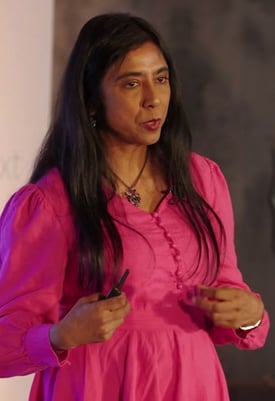
Nirvani Dhevcharran
CTO: Platforms and Operations, TFG
Nirvani Dhevcharran is CTO: Platforms and Operations at TFG (The Foschini Group), the South African retail group behind 39 brands and more than 4,900 outlets on five continents. She is responsible for the platform infrastructure in TFG's stores and head office, and is a passionate advocate for sustainability in IT and AI. She has been with TFG for seven years.
You May Also Like

Want to See RETAILNEXT IN ACTION?
Talk to our team. We'll show you exactly what RetailNext can accomplish for your business.