Customer StoriesStore Operations Traffic Analytics
How Data's Changing The (Arcade) Game
August 4, 2025
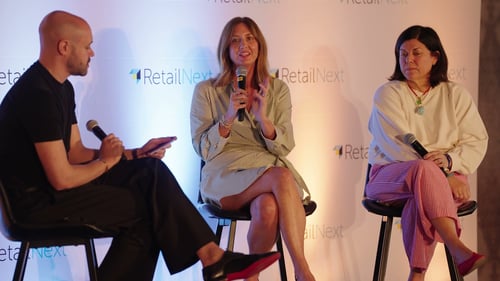
At NRF 2025, RetailNext hosted a dynamic Fireside Chat featuring Ayotunde Gibbs, Vice President of Enterprise Systems and Data at Dave & Buster’s, and Joe Shasteen, Global Manager of Advanced Analytics at RetailNext. The conversation focused on how data is transforming the arcade-meets-dining experience and why personalization, adaptability, and strategic visibility are essential in retail entertainment.
DISCOVER THE NEXT GENERATION OF TRAFFIC COUNTING 👉 Traffic 3.0
Transcript
-
Read the Transcript
Good morning. Thank you everybody for joining, today's RetailNext Fireside Chat with Dave and Buster's. I'm very happy to have Ayotunde Gibbs, the vice president of enterprise systems and data with us today. Just a little bit about RetailNext and myself.
I'm Joe Shasteen. I'm the global manager, advanced analytics at RetailNext. And RetailNext is the first retail vertical IoT platform to, provide ecommerce style analytics to brick and mortar stores. Our centralized SaaS platform automatically collects and analyzes the data, provide real time data to our retailers so they can make business decisions and improve the shopper experience in real time.
We are the pulse of the store with over more than four hundred and fifty retailers across a hundred countries, globally. And with that, it's Hyundai, would you mind just a few quick background of yourself as well as your time at Dave and Buster's and overall, Dave and Buster's strategy for the stores that you're rolling out. Yeah. Absolutely.
Well, thank you for inviting me to this fireside chat. So I've been at Dave and Buster's now for about three and a half years. And, in that time, I've had, an opportunity to lead the store point of sale teams. And right now, I lead the data engineering and analytics team and the enterprise systems team.
So about two years ago, Dave and Buster's began, an exercise to really understand what our foot traffic was in our locations. Previous to that, we really didn't know how many people were walking into our locations and how to best utilize that data to manage our labor and get a better forecast for our revenues. So that's where Resil Next came into the picture. No.
That's great. So kind of with that, a little bit about the background into the data the journey with data analytics. So could you walk through kinda what the process was like before getting traffic? You know, what were you using as kind of a data source for maybe estimating traffic?
And then, you know, as you've started to roll traffic out, what are some of those learnings and interesting findings that you might have had while, you know, installing these first stores with Trafisch? Yeah. I was fortunate when I took over the organization to understand that really, Dave and Buster's, for the most part, is data driven and data led. And, before we had true footfall traffic, we used to use what we call a traffic proxy, which was essentially how many people in our locations had bought or played with a power card.
So if you've been at the Dave and Buster's recently, part of the experience is you buy what we call a power card and then use those power cards at our hundreds of games on the game floor or the arcade floor. So we were using the swipes on the card as a proxy for traffic. However, the problem was that only tells you who was actually coming to the locations to play games. But if you've been at the Dave and Buster's before, you'll know that part of our experience is games and also food, which means if you came to our locations and you were eating, then we missed you in that traffic count.
So that is why we really needed a wholesome solution to understand every single person that was walking into our location, whether they were amusements, as we call it, or whether they were food and beverage, or even boat. Yeah. And as the lead with data for Dave and Buster's, how has this kind of empowered your teams to make better decisions, you know, now not now having actual true source of traffic as opposed to just a unique power cards to estimate it? Yeah.
Well, I give a a really good example of how our general managers are managers are able to manage their locations better with the data they have. So if you've ever been in the Dave and Buster's, you could be in a really small location that's thirty thousand square feet or one of our humongous locations that's seventy thousand square feet or even more. And our general managers always want a pulse for who is in the location at a specific time to manage labor or to make sure that labor is placed in the right location. Well, before RetailNext, we essentially had clickers in our stores.
So the general managers will assign a lead to go around the store and use the clicker to count how many people were in that location. Well, now with RetailNext, they have the app. They can just open the app and understand exactly how many people are in their location using the occupancy metric. So that's been a game changer for us.
Now the general manager at any time, any day, any hour can look at that app and immediately understand how many people are in their location. And then that drives a bunch of other decisions. So if today was a rainy day and there's only a hundred people in my store, then I can manage my labor to that level. You know, I might not need as many people in the location.
Right? Or if it is a rainy day and I know people walking in will need more assistance maybe with umbrellas or something, then I know that I can deploy my resources to the front. And another cool benefit of the app is it allows them to have real time access to the cameras at the front of their stores, which is typically where our help desk where our front desk is. So they can look at the front desk and understand who's coming into the location, who's stationed at the front desk, and be able to direct to make that, initial experience at the location even more pleasurable for that depth.
Yeah. I think that's a really great point that you mentioned just around freeing up some of the labor power of right not needing to have anybody kinda go around doing manual click click scarcity. I imagine that's a huge time saver for those associates who used to have to do that. Absolutely.
And then also the video aspect too. Too. I think that's a really kind of underutilized aspect in many cases. The ease of, you know, seeing the video, understanding kind of what it looks like in certain areas, even from a compliance standpoint.
Is there any sort of ways that video might be being used, right, to ensure that kind of the experience, at least at least the entry point to the to the location, kinda what you want? I just find that's a valuable way to look at things too. Yeah. I think the first is making sure that, you know, the team is set up for that welcome experience.
But, you know, anecdotally, what I've also seen is with our hierarchy, the GM is not the only person that had access to that camera anymore. So the regional leader also has access to the camera. And, I even saw some GMs at some location looking at their competitive stores in that same region and seeing how they're set up in the front. So it kinda created a little bit of competition because now everyone knows what everyone else is doing.
And then as a leader, I know exactly what it looks like, and I can direct in the moment. You know, maybe I need more people in the front desk because I see a line at the door, and I can make those immediate decisions and immediate, changes, you know, in how we manage that experience at the front door. That's that's interesting the point about kind of the internal competition. Right?
So have you found that that's been kind of successful as kind of sharing findings or best practices from some stores with other ones now that, you know, some of your GMs or regional managers might be seeing how other locations are set up? Absolutely. I mean, finally, they have data at their fingertips, but not just for their locations, but for all locations in the system. So a hundred fifty eight stores know how a hundred fifty eight other stores are doing.
So it creates this competition because when I go in the app, I know if, the first store, the second store, or the fiftieth store in the whole chain. So definitely creates more competition and also a lot more awareness to say, hey. I am in, the New York store, which is where we are now. We have over ten stores in New York area.
So I can look at the stores nearby me and understand who has the most traffic, why, and then look at their front door to see what that traffic looks like at any time, at any point in the day. Yeah. I mean, we work with a lot of retailers, and I find there's often different strategies for sharing data. I mean, some retailers, they don't want to allow, you know, a GM or a regional manager to see a bunch of other stores or regions.
So what's kind of been your strategy with that? And it sounds like you're trying to be very transparent with the data, kind of, you know, get it throughout the organization as much as possible. So what's kind of Dave and Buster's strategy overall for that as well as, you know, the specific users of the data. And you talked a little about labor allocation, but any other sort of, you know, options where you found kind of distributing the data throughout the organization has been really valuable.
Yeah. I think for us, it's really opening up the data to all of our stores. And, you know, we're a fun brand. We're a brand that loves competition.
So we're always in the mode to, you know, compare what I'm doing with what my peers are doing and just create that gamification so everyone wants to understand and, you know, build better traffic or build better operations. So really giving them access to everything hasn't been a concern for us because we have that culture already, and the app, something super convenient. So when I'm a general manager or one of the line leaders, I'm I'm in the store, I don't want to be carrying an iPad or something heavy. So having that app, that's super convenient, help them to have access to that data, you know, in the moment at any time.
So that's really being part of our strategy is making sure everyone has access to the app. So with that, right, app kind of more for users in in the stores. Right? But what about more kind of the corporate level or leadership level?
How is the data being distributed to them, and what decisions might be being made at kind of the higher level based on the the data that you're seeing too? Yeah. Another really interesting use case is, during our remodel program. So right now, Dave and Buster's is going through remodels of a lot of our locations, and we're introducing new, open air, more open layouts and also new games.
And as part of that remodel, the data has helped us understand exactly where to invest in that location. A lot of Dave and Buster's stores are located in malls, and typically, they're anchors where they have multiple entrances where one entrance, is directly into the store and another entrance leads to the mall. So it helps us understand how many people are coming in through a direct entrance and how many people are coming in into the mall. That way, when it comes to, you know, our fancy entrance style and design, we can understand, well, do we invest in the mall entrance?
Or perhaps we don't because there's not as much traffic in that area, and we put more of our effort in the front design where people where there's more traffic going to the store and more people, going through that entrance into the location. And kind of along those lines, were there any surprises that you found, like, maybe where, you know, maybe one GM thought or store manager thought it was one entrance, but turned up to be another and kinda changed your strategy a little bit around where you're gonna make those investments? Yeah. Absolutely.
I think, we have lots of GMs in our systems that, you know, have been at their stores from multiple locations, you know, five years and ten years. So, of course, they have an intuition about which entrance has the most traffic, but finally, we're able to get them black and white in data, you know, in numbers and not someone's intuition. So that's one. And then the second one is we also have newer GMs that have only been in their location for a few years, so they have not built that intuition yet, And that's where we have the data.
And kinda take a little bit of a step different, in this case. So looking more about kind of the customer engagement and customer experience, you know, from a labor standpoint, you kind of explained a little bit about how you might be able to utilize that. But are there other ways that you're using that data to make a better experience for a customer? They're segmenting your customers a little bit more.
You mentioned kind of the entertainment customers, the dining customers, you know, any any sort of findings based on that so far as well? Yeah. I think one thing we found was, like I mentioned previously, before we had a true footfall traffic sound, we used to use what we called unique power cards, which was based on entertainment. Now that we have true footfall traffic, we understand how many people are really in the stores versus how many people actually bought games.
So now we have a delta, and that counts that helps us understand either they're only there to buy food or they bought a power card for games and they ate. So now we understand that customer segment in our location. And because we have that number now, we're able to make plans on either what we call, an attach, which means we convince you to, you know, maybe buy a burger after your, one hour in the arcade. Or we understand that you just came for food, and we can convince you to maybe buy a power card and spend more time in the arcade.
Makes sense. Does that, what teams kind of are using that? I think you had mentioned that it had some implications for marketing and trying to understand a little more about acquisitions there. So is that mainly the teams that are kinda looking at, strategies around, you know, converting those customers into being, you know, both dining and entertainment?
Yeah. So, I think we have really a plethora of users within our organization. The marketing team obviously has access to this data and is also using that for customer segmentation. Definitely, the operations team are our primary users, and then our real estate or construction teams as well.
And then just kind of, you know, along the the final lines around, you know, the labor planning and, you know, other aspects there, sounds like you're able to adjust pretty quickly on the fly based on those trends. I know through the app, that's how they're primarily doing that. But are there other ways in which they, you know, make tweaks to, like, call more people in if they see it's very busy, maybe say a fewer people? Just what are some of those strategies around making the decision around that?
And kinda what's the the lead time necessary to make those kinda on the fly labor changes in the stores? Yeah. Depending of our location of our stores, weather is a big factor in traffic. So, unfortunately, if it's a great day outside and everyone wants to go to the park, they don't come to a Dave and Buster's.
But if it's hot and sunny and then everyone wants to come in because it's too hot and they want something indoors, you know, that's enclosed and air conditioned. So that really drives our traffic. But that is, again, an intuition. You know?
So the store leader sees traffic. You know? He's thinking, well, it's a hundred and two outside today, so I think I think there might be more people in my locations. But then with the app and with the occupancy, he's able to understand, okay.
Well, it is two o'clock, and it looks like I already have four hundred people, you know, in my location, then I'm able to call my backup resources. Hey. I only had twenty servers that were scheduled today. I think I might need two more.
You know? So you call the backup resources, and you say, hey. It looks like I might need more help today. Could you come in at such and such time?
So it's those decisions that this now allows us to make. No. That's great. And, yeah, especially hearing about how you're able to make changes on the fly.
I know there's a lot of our retailers who would like to do that, but it sounds like you're able to really do it, you know, much more real time in many cases. Yeah. But then also kind of taking a step, you know, looking towards the future. So, you know, rest of twenty twenty five, even into twenty twenty six.
What are some of, like, the things you're most excited about with, you know, using this traffic data into into the future? Yeah. Absolutely. Well, Dave and Buster's lives and dies by comparables or what we call comps and other retailers do as well.
So year over year comps is really how we measure performance. So we've installed all of our traffic cameras except for a few where we have remodel locations, and we're looking forward to, you know, the day, the hour, the minute when we'll finally have these year over year comparables that our leadership team and our corporate team can really use to understand performance year over year. And in addition to that, we are, you know, really building out our AI and machine learning models and including traffic. So we really have three primary drivers that we use for our machine learning models.
The first one, obviously, is historical data, so the historical revenue of that location is used. The the second one is weather. Like I mentioned, weather really drives traffic into the location, and the third one is traffic. So now we finally have that third, really important and critical variable that we can use to improve our forecast accuracy when we have that year over year comparison.
And that's something I've seen really powerful as well. Right? Especially a lot of our retailers are using sales to kind of forecast things. Right?
But in many cases, that's, you know, it's already happened. Right? So traffic is that leading indicator into what's your overall opportunity from a revenue standpoint on those particular days. I think that can be really beneficial for planning purposes.
But you were mentioning traffic is now an input into some of your models. So is traffic kinda driving some of the changes that you're making from either, like, a planning perspective? And I I know it still might be early. You're you're still developing some of the models you get into year over year trends.
But what are some of those other implications that you might see? You know, maybe in the food and plant or food and beverage plan sorts of things, you know, those aspects as well. Yeah. Traffic is, again, one of those primary drivers that helps us understand how to, better manage our locations.
So everything from labor, labor becomes, another aspect of the store that we can manage better if we have better accuracy in our forecast, that we will have year over year comparison. But we're able we're also able to manage demand as well. So if we have a good forecast and we understand what the demand will be, it not only drives our label levels, it also drives, kitchen staff levels. It also drives how much product we'll buy, you know, for for our food and beverage and also for our redemption store.
With your forecast, how far are those being updated? Right? So, assuming, you have one at the beginning of the year, you're getting data throughout the year. Are you continually refreshing that and updating the forecast, or what what's that process look like?
Yeah. Really, it's daily for us. So, obviously, the weather, weather forecast yet more accurate the closer you are. So that makes it so we want a daily revisions of what those forecasts look like.
And then there are various other factors that change on a daily basis. So we keep that forecast on a daily basis accurately fresh. Great. Great.
Awesome. Well, I think just the final question is kind of you were talking a little about the planning, but anything else that you're really excited about with, you know, with the traffic data for, you know, the future as well? Yeah. Like I mentioned, just getting, a a better sense of our historic and year over year, compare comparisons is really important.
But like I mentioned, Dave and Buster's also has a relatively mature data engineering team. So in addition to using the mobile app or, the reporting that RetailNext provides, we're also able to pull the data into our data lake and use that with other aspects to make sure, again, we understand, better how's the businesses performing and opportunities for growth. And final question on that. Just are your teams looking at, like, correlations, relationships between those, seeing what the the history of those relationships have been and then kind of making adjustments based on that?
Yeah. Absolutely. Our data lake contains so much data, not just weather, not just, you know, traffic, not just sales, but we also have customer sentiment and customer feedback. So having this data helps us to ground us on what is true, what is fact, and then helps us to pull in those other elements and make a better picture of not just what we have historically, but where to move forward to in the future.
The the customer sentiment aspect is really interesting, especially as maybe you kind of are developing those models. But looking into the relationships between you as you're seeing changes in traffic and changes in customer sentiment, is that part of the road map as well potentially to start be kind of looking at the relationship between changes in traffic trends and maybe changes in some of those customer sentiment scores? Yeah. I think that's exactly where, you know, this comes into the picture.
So if we understand that our traffic is grown or has reduced and then we map that up with customer sentiment, and then we can understand is my customer saying sentiment higher or lower when I have a lot of traffic in the location? And does that speak to how I've managed my labor on that day? So maybe the customer sentiment is lower because there were more people in my location, and I didn't manage my labor properly. So it led to long wait times at the server table or maybe my server was not as attentive because they had more people in that in that day, you know, to attend to.
So that's where it helps us really understand, again, how to manage the business. Yeah. That's really fascinating especially to really goes back to making sure that customer experience is aligned. You're really all tied in together with the labor and the customer experience and how important that can be just to, you know, make sure that customers wanna come back and they're a loyal, you know, a loyal customer of Dave and Buster's into the future.
Yeah. Absolutely. That is our goal is to make sure that you have a great time when you're in our location and you want to bring family and friends back with you the next time. Right.
Well, thank you so much. I think that's it for for all the questions I had, but I really appreciate, you joining us today. And thank you everybody for attending our session with Ayotunde Gibbs, vice president of data and enterprise at Dave and Buster's. Thank you.
Thank you for having me.
You May Also Like
Want to See RETAILNEXT IN ACTION?
Talk to our team. We'll show you exactly what RetailNext can accomplish for your business.