Customer StoriesIndustry Events Aurora SensorTraffic Analytics
The Beauty Of Accurate Data Insights
February 18, 2025
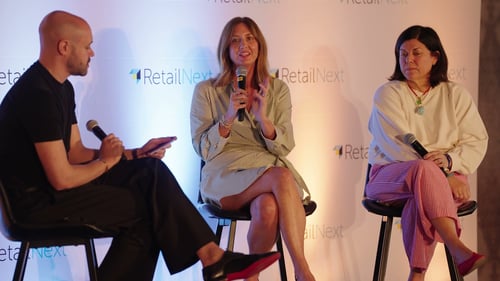
At NRF2025, Jimmy Elzaky of Biologique Recherche and Joe Shasteen of RetailNext explored how data is shaping the future of personalized beauty retail. From its first store in Paris to its expansion into the US, Biologique Recherche has mastered hyper-customization, but scaling luxury requires precision.
RetailNext’s analytics have helped refine store performance, optimize staffing, and even debunk industry myths (Mondays, not Saturdays, are their busiest days!). Shopper behavior insights, heatmapping, and conversion tracking are revolutionizing how the brand enhances customer experiences.
More from NRF 2025: [VIDEO] Taking The Pulse Of Physical Store Trends
Transcript
-
Read the Transcript
Good morning, everybody. Thank you for attending RetailNext's first fireside chat of twenty twenty five NRF. I am very excited to welcome Jimmy Elzaky, director of retail and real estate at Biologique Recherche, with me this morning. Before we get into that, I just wanna do a little bit of a background of myself.
I'm Joe Shasteen, global manager of Advanced Analytics at RetailNext. And RetailNext is the first vertically oriented IoT platform to provide ecommerce style analytics to brick and mortar stores. We are the pulse of the store. We are we are trusted by more than four hundred and fifty retailers across a hundred countries, in order to enable retailers to get real time insights into traffic and improve the shopper experience.
And, again, thank you so much for joining me today, Jimmy. Would you mind giving a little bit of background of yourself and Biologique? Awesome. Thanks for having oh, thanks for having me, guys.
Thank you, Joe. Thank you, RetailNext. So like Joe mentioned, Jimmy with Biologique Recherche, we're a French skin care company, based out of Paris. We've been around since nineteen seventy.
And we are kind of very disruptive in the skin care industry where there's a lot of brands out there, but what we do is we kinda take skin care and we kinda turn it on its on its side. It's a very curated, very, personalized, and we like to say hyper customized brand where there's really something for everybody. There isn't a one size fits all product, and we really take pride in personalizing your routine. And our motto is building better skin as a brand.
And people have really seen, like, life changing results where people have suffered with, like, eczema, acne, rosacea, post pregnancy, like, hormone outbreaks, and people's skin has really changed and evolved over the years. So we've kinda built this cult following where you kind of have to seek out the brand to, to find it. A little bit about me, native New Yorker. I've been in retail since I was in high school and just kinda fell into it and really made it into a career, and now I'm here.
I've worked for some brands like L'Oreal. I've overseen, ecom, d two c, retail stores, warehouses. Prior to BR, I was at doctor Barbara Sturm, global head of operations. So, basically, you know, synchronizing client experience across the globe, which is not an easy task, and building and opening, flagship boutiques all over the world in Europe, Asia, UK, Canada, Mexico, US.
So, yeah, excited to be here. Thank you so much. So to get right into it, wanna talk a little bit about BR's kinda history of physical stores. So the first store was opened in nineteen ninety two on the Champs Elysees, and now you've started to open up more stores in the US.
So wanted to talk a little bit about the journey of physical stores, kind of how that's expanded over time. What is the goal of the stores? What is the experience that you wanna provide to customers? And, yeah, especially as you've expanded more into the United States.
Cool. So retail for us is kind of something that's new, which sounds crazy. But the last forty years of the brand, we've really only focused on being in high end luxury hotels like the Four Seasons, the Ritz Carlton, and you could you really had to, like, search and find the brand. It wasn't just readily available.
And we really prided ourselves in that, and then we were like, wait. We're really good at what we do. Why don't we have our own, you know, retail stores? So in nineteen ninety two, we opened our first, which would or we call our stores, which in French means embassy.
Makes no sense to any of us, but it's basically the the the rarest, experience you're gonna get for the brand. So it's a three sixty experience. You can have a personal skin analysis. You can experience our facials, body treatments, scalp treatments, and then you can also explore the full range of products.
We actually just launched e com, which sounds crazy, three years ago in the US, which is wild because most brands have had ecom since the Internet, launched in the nineties. So we're a little behind in the times, but what we do, we do really well. The US is really the focus for us. We have a few, ambassad around the world, in Europe, and in Asia.
Soon more to come in Europe as well, but the US is really where we're focusing on our expansion plan. The US is our biggest market for the brand in general. US represents about sixty five percent of the global revenue for the entire company, so US expansion is our our big focus. Right now in the US, we have, LA, which is our flagship on Melrose Place.
We have Boston and Newberry Street, and we just opened on Wednesday where it literally came from yesterday, in Houston in River Oaks District, and there's a lot more to come. So excited. No. That's that's great.
That's really exciting to hear. And, actually, so what I wanted to ask about too was some of the learnings that you've taken from maybe the opening on Newbury Street in Massachusetts to Houston. What what did you find as you were kind of opening that third location in the Houston? And any takeaways, anything that you learned from that Newberry opening that you applied when you were opening the Houston location?
Don't order things at three o'clock in the morning on Amazon. Definitely, you know, as as we open more and more stores, we learn, like, what not to do and what to do and what works well. So now we've kind of formulated this, like, template, this, like, major, you know, master checklist of all the things we need to do, who's responsible for what. Or before, it was just chaos, and everybody was trying to do everything.
So I think from an operational standpoint, we've definitely mastered the operations of who's gonna do what, who's, you know, ordering what, because it was LA. It was prior to my time when it opened. It was an absolute nightmare to get it open. And now that we've kind of mastered this, like, template and science, we can just, like, open them as as we need, which is great.
RetailNext has been a big part of that, so we're we're we're happy to have them. No. That's that's wonderful to hear. Yeah.
We're definitely always happy when you're able to make those changes based on, you know, experience of opening up other stores, you know, using the RetailNext data as well to kind of inform that. It's always, you know, what the goal is. But to to take a little bit of a step back to kinda talk about the overall health and beauty industry at this time. So, you know, overall, retail, it's been a tough for the last couple years.
But health and beauty, we found, has actually been one of the more resilient categories. At least in twenty twenty three, it was our top category showing about two percent growth in traffic year over year. Number one of our five categories that we publicized. This year, it's been a little bit more kind of about average.
We've seen it kinda more in the apparel segment. Jewelry's kinda stepped up a bit. But kinda curious for your thoughts and especially, like, what BR might be doing in particular. How are you kind of combating some of those overall trends in retail where we're seeing, you know, traffic declining a little bit?
But how are you trying to utilize, you know, the traffic or the data that you're getting to make better conversions off the people who are coming into your store? I think, you know, beauty really rose during COVID. So during COVID, I was in I was working at L'Oreal, and, we saw an insane increase in business, especially in skin care. Lipstick was kinda down because everybody was wearing face coverings, so no one was really wearing lipstick.
But skin care was at, like, its peak during COVID. So everybody was at home. Everyone was bored. We're like, what are we doing?
So everyone was on TikTok doing, you know, skin care routines, face masks, you know, at home facials, at home gua sha, all the things. So I think ever since, people were locked inside, I think there's been this huge focus on wellness. So wellness in general and that whole industry beauty kinda ties into it. Even in recession periods, you know, people are still buying a lipstick.
They're still buying a face cream. They're still buying a mask where they might not be going out and buying the fancy purse or the fancy dress. For us, we're we're such a relationship built, you know, experiential retail space where it might not be your everyday, but people are still gonna take care of themselves. You know, you might not go out and buy the Chanel bag every day, but you're definitely coming in, like, once or twice of once or once every two months for a facial just like people go to the gym or go get their nails done or their hair done.
It's part of your it's become part of this daily routine. Some of the data that we've used, from RetailNext, especially for our traffic, is mostly for scheduling. So because we're appointment based, you know, we don't really have, like December is not our peak season. Every month is is holiday for us because we have our loyal clients who come in month after Our repeat client rate is super high.
Average right now, about fifty to fifty five percent a month are repeat clients because they're people that are coming in monthly to get their facials or to pick up their products. For us, the data we use most is try to figure out what the peak days are for us because we're not a traditional retailer. It's not like Saturday is the day where everyone's going out to buy their skin care. It's like maybe on a Monday after work, I'm gonna go get a facial or a massage.
So for me, it's, you know, utilizing that data to figure out, okay, how many appointments do we need to have open for those peak days where we see people? Because I need to maximize on the clients that are coming in. And sometimes we have waiting lists because I only have five employees on a day, but then there's ten people waiting to come get, you know, treatments. So it's really interesting.
It's, definitely different than, like, a traditional, you know, apparel or fashion retail store. Yeah. Definitely. And that was one item I wanted to follow-up on too because in particular, especially being so appointment based at this time, How did you see the need for traffic?
Because I know some retailers who, you know, have appointment based. They don't think there's a lot more walk in traffic. What have you seen and kind of what was the impetus for getting traffic even though you are such appointment based, you know, retailer? Yeah.
I think it's two things. Like, even though we're a brand that's been around for fifty plus years, we're still working on brand awareness. So even when we look at opening retail locations, we, you know, we know that if we go, people will come, but we wanna also acquire new clients as well. So we look at high traffic, you know, streets like Newbury Street, Melrose Place in LA.
It might not be the highest traffic, but it's prestigious, and it's a destination, so people are gonna come seek out the brand. For me, like, the ratio of people walking in versus people, you know, coming in for appointments is kinda like three to one. And what's beneficial for us is we offer more than just something to sell. We offer an experience.
So someone might come in, a brand new client off the street. Hey. I need a new face cream. I need this.
We can convert that client into a repeat client by booking them an appointment to come back in a week or two weeks to get them to to, you know, to come back in. So our, our conversion is actually pretty impressive compared to any other retailer I've worked at. We're on Newbury Street. We're at forty two percent conversion of people coming in, because that return rate is so high.
So we might not have, you know, a thousand people walking in a week. Even if it's three hundred, forty percent of those people are are are being converted, which is really awesome. Yeah. Kind of along those lines too.
As you've been working with the traffic data and the conversion data in particular, was there anything else that was surprising to you or really interesting that you weren't expecting to see? Maybe conversion, maybe the three three to one ratio, but anything else kind of along those lines that you found was kind of really opened up by having traffic data in these locations? Yeah. Absolutely.
I think, you know, you expect as a retailer, like, the weekend is gonna be your busiest, you know, time. And a lot of times for us, like, Monday sometimes in most of our locations is the busiest day where, like, any apparel retailer I've ever worked at, Monday was the slowest day. Monday was where you had, like, minimal staff. Most people were off.
Some some days for us, Mondays are twenty twenty thousand dollar days, and Saturdays five a five thousand dollar day. So, the traffic has really helped us kind of really pinpoint, like, okay. This is where we need all the troops on these days, and this is where maybe we could be a little bit lighter in terms of staffing. Also, with the traffic, when we plan events as well.
So if we do events for clients, we're like, okay. These are the days that clients are coming to us. So these are the days we need to target, to have events where we've done weekend events, and they haven't they've kinda flopped because people are doing other things on the weekend. So that's really helped us as well.
And then another thing, that I've used in the past is, like, the heat maps to kind of see, like, directions as to where clients are going. For us, we're a little less, like, we don't launch new products all the time. But if we are gonna focus on, you know, where we're positioning, let's say, a new launch or a new product in the space, but, like, okay. Client comes in.
They're walking directly to the right counter. This is where I'm gonna focus our new product and our new launch or something we wanna kinda repush. This is where we position it. And also just from general merchandising perspective or store layouts, we kind of, you know, we take that into consideration as to when we do our VM layouts as well.
Great. Great. Yeah. Well, kind of we we work with many brands.
Right? And the most successful brands are those ones that are able to share the data throughout the organization in order to make, you know, data driven decisions, you know, as close to real time as possible. So I'm curious about how you're able to share the data internally either with, you know, corporate leadership or with store teams. What does that look like at BR?
Well, the first thing that's really great is when we have a a rough week. I can be like, well, nobody walked in the store, and then that's my excuse because then the CEO is like, what's going on? Why aren't we busy? But for the most part, our store managers have access to our portals so they can go in when they're making their schedules.
We because we're appointment based and people like to book in advance, we usually, we usually try to make our schedules about a month, a month and a half in advance. So we look at the month criers traffic data, and we kind of use that to figure out, okay, how many appointment slots are we opening up for Monday to Wednesday? How many are we having Thursday to Sunday? And we use it that way.
That's more, like, on a store level, for scheduling is really the biggest thing. And then, on the corporate side, we're using it in our, like, BI dashboards that we have internally where we're plugging it in. We're looking at it on a global level to compare to, like, other, you know, stores around the world where maybe in Europe, the foot traffic is much lower than it is in the US. And we use it internally to kind of, you know, compete on who has the best conversion, who has the most traffic, why is this store busy, why is this store not.
And it's really interesting to see, like, month over month. Like, in Newberry, summer was our biggest, biggest peak time. Like, we, you know, we saw double the traffic in August, which, normally, August is vacation season and no one's shopping. And December was our lowest traffic month, which is wild, because I would think it would be the opposite.
So really interesting insights. Yeah. That's definitely interesting when you see those sorts of trends that kinda buck what you would expect out of, you know, traditional retail in that way. But you would also mention, you know, kind of opening new stores as well.
So I'm curious, are you using the traffic data in making any sort of decisions around decisions around store segmentations? What type of store is gonna go into certain locations? How are you you know, first of all, how do you look at your own stores when you're opening them? And then how does the traffic maybe play into some of the decisions around that as well?
So we kind of segment our retail stores. I'm sure a lot of you guys are familiar with, like, a, b, and c stores, like, different levels. So for us, we have three formats. We have large flagships, which are gonna be major cities like your LA, Miami, Dallas, New York.
And then, we have what we call large format, so they're, like, those bigger secondary cities, like, I don't know, like a a Houston, a San Francisco, a Chicago, maybe. And then we have, like, the boutiques, which depending on the neighborhood. So, like, Newberry for us is more of, like, a boutique because it just kind of it fits with the vibe of Newberry. You wouldn't really open this mega flagship on this, you know, small street.
Something like a Greenwich Avenue in Connecticut is gonna be more of a boutique. It's like that neighborhood client. It's not very tourist driven, where flagships are gonna see a lot more tourist traffic than neighborhood stores. And then when what kind of you know, when we do our planning for, like, sales planning, the size of the store, like, how big it's gonna be, how many treatment rooms we're gonna offer, We kind of look at those comparable others.
So we've now we have three. We did it on purpose where we opened kind of one of each format to test to see which one's working. And then so we have LA, which is our flagship on the West Coast. We have Houston, which is our kind of, like, central large format, and then we have our boutique in Newberry, and that's one of each.
And it's interesting to see because the traffic trends are completely different, and business is completely different. So now I'm like, okay. We're planning for, you know, twenty twenty six and seven and eight and nine. Okay.
How many boutique, you know, stores am I gonna plan? And kind of basing it off of Newbury, it's like, okay. Boutique sees this much traffic. This is how much sales we're gonna anticipate, you know, annual revenue.
This is, like, this is also where the cap is because you sure. You could say I'm gonna do five million dollars, but is that realistic? You know? Can you can you pump out five million dollars in this small little store?
Do you have enough rooms? Do you have enough, you know, aestheticians? So that's that's super, super helpful, especially in, like, a long term planning as well for us. No.
That's great. Yeah. Especially understanding forecasting. Right?
So you understand expectations and what's reasonable. But kind of along those lines too, do you expect the experience to be different for a customer walking in if they walk into your flagship versus if they walk into a boutique location as well? This is, like, the million dollar question. I think one of the hardest things to experience in to, like, master in retail is walking into the same brand store in a different location and having the same exact experience because, sure, all of us have shopped at many retailers, but, like, I don't know.
Maybe you go to, like, Bloomingdale's in New York and then you go to Bloomingdale's in LA. It's very rare that the experience is gonna be the same, and it's a really hard thing to nail. But the the goal is to have the identical experience, which is exceptional customer service, exceptional treatments in every location, whether it's the US, Europe, you know, Asia. Of course, like, you know, everywhere you go is gonna have a little bit of a different vibe, but the experience and the client should be feeling exactly the same regardless of where they where they visit.
So just kind of final question for you on that. You know, what are you looking forward to for the rest of twenty twenty five, twenty twenty six, potentially, you know, with using Traffic Data or with using any sort of interior data, like you mentioned, using direction maps as well to inform some decisions? So, yeah, what what are you looking forward to most about the rest of the year twenty in twenty twenty six from a new store opening perspective and potentially as well with additional traffic and, you know, understanding more data about your your stores as well? So I think this year in general, twenty five, now we have, like, our three formats.
We're kind of testing them to see, like, what's working, what's not working, and we're right now building a five year expansion plan. So from now until twenty thirty, to see, you know, how many flagships are needed, how many boutiques we need, and then also focusing on not over saturating the market because we still wanna be niche and we still wanna be, you know, sought after. It's not like, you know, you can just pop into any department store. We're not sold at Bloomingdale's.
We're not sold at Sephora. We're not at Ulta. You can't just, like, walk in and buy it. Even online, it's still really hard to buy the product, and and we kinda do it on purpose.
And, for us, we're trying to really perfect the US retail model because it's still very new. Our stores are only some are only a few months old, and some are three years old. So we still don't have, like, this, you know, key foundation. And I think we're trying to build and master and really refine our processes, our client experience, scheduling, all the things that, you know, go into building a store.
So that this way, when we expand, we do it right. We don't just open stores for fun, and it's like, oh, well, it didn't work. Sorry. And then for the future, when we talk about expansion, for the future, we're kinda looking at about ten stores total.
I keep calling them stores, ambassad, total, for the US. Again, like, key key cities, you know, like your Dallas, Miami, Chicago, Atlanta. And it when we do them, we do them grand. We don't just, you know, we don't just do anything like can I say half ass?
You know, we when you walk into one of our stores, I mean, everything is, like, the finest materials, the finest flooring, the finest water. Even the tray that you're get you know, you're served like a tea on is like real travertine. I mean, it is just a such a luxe experience, and we wanna be able to continue doing that, but we have to do it right. So, you know, traffic has been a big thing for us, especially planning store sizes and neighborhoods and what the expectation is has been really, really key key for us.
And just one quick follow-up on that too. When you're actually picking the location within those cities, you know, you don't have the in store traffic to do. So what type of data are you using for making those decisions of, you know, where actually within Miami or where actually within Houston are these stores going to go? So I think, cotenancy is a really big one.
We obviously wanna be adjacent to, like, high end luxury retailers, and we have, like, a a curated list of retailers that we kinda follow. So, you know, we look at, you know, who are we sharing clients with. Right? Like, where is our client going?
Are they going to Brunello? Do they shop at Hermes? Are they at Cartier? So most of our most of our stores are kind of surrounded by those, like, big luxury players because we do share clients with them.
And what happens is most of their clients become our clients if they aren't already. Depending on the market, we don't really do malls. We're not a mall place because think about it. You're, you know, you're about to spend three, four hundred dollars to go relax.
The last thing you wanna do is, like, walk through a mall through, like, an Auntie Anne's and, like, little kids running around, and that's for you. That's not relaxing. So we really look at street stores, or we look at, like, outdoor I hate to call them malls, but lifestyle centers, which is what we have in in Houston. You know, in in LA and in Newberry, there's street stores.
New York will be a street store as well. So it's hard because there's very few luxury outdoor centers in America. So we really are looking at those places where someone can just drive up to the spa, park outside, go have their treatment, get in the car, go home, and, you know, get cozy. We we aren't really a mall, you know, kinda place.
And then it's just we usually use a lot of, like, real estate data. Foot traffic is a big one. So, like, even on Newberry, you know, the whole street's busy, but there's blocks of, of streets that have a lot of foot traffic, and there's blocks where you have all these beautiful stores and, like, this much foot traffic. So it's like, you know, the rent's high and the foot traffic's low.
So there's a lot of things that go into it, but, also, you know, infrastructure, facade, building structure, things like that are also really important for us. Well, thank you so much, Jimmy, and thank you everybody for attending today's session. Again, thanks again, Jimmy Elzaky, director of retail and real estate at Biologique Recherche. Thank you very much.
Thank you.
You May Also Like
Want to See RETAILNEXT IN ACTION?
Talk to our team. We'll show you exactly what RetailNext can accomplish for your business.