Customer StoriesMerchandising InsightsTraffic Analytics
The Hidden Gems In Jewelry's Performance
December 8, 2024
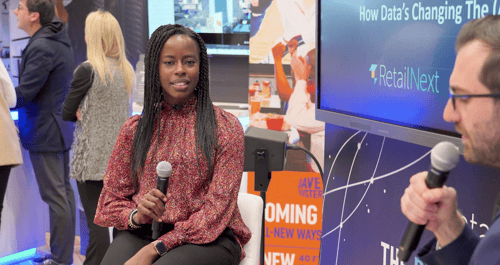
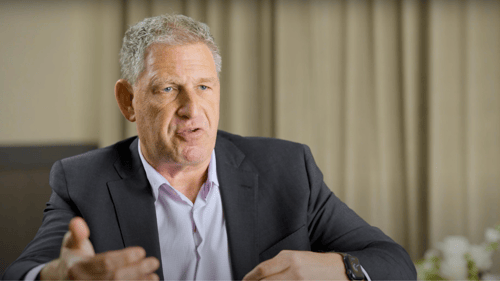
In conversation at the 2024 National Retail Federation Big Show, Jenna Suhl of RetailNext hosted David Sherwood, CEO of Daniel’s Jewelers, to discuss the brand’s remarkable 76-year legacy and its embrace of cutting-edge analytics to stay competitive.
Founded in the 1950s in Bell Gardens, California, Daniel’s Jewelers began as a small family business. Over the decades, it has grown to over 100 locations across seven states. Despite demographic shifts in its customer base, the company has remained true to its mission: celebrating milestones with value and accessible credit. Sherwood attributes this enduring success to adapting operations while preserving the company’s DNA.
One of the pivotal tools enabling this adaptation is RetailNext, a platform that provides granular insights into store traffic and shopper behavior. Before 2020, Daniel’s Jewelers relied on sales metrics to gauge performance. Today, traffic analytics allow the company to measure conversion rates more accurately, optimize staffing, and even refine visual merchandising. Sherwood shared an example of how Sunday traffic patterns challenged long-standing assumptions about scheduling, leading to better resource allocation.
The platform’s versatility extends beyond operational efficiency. For example, traffic cameras have aided in loss prevention, providing detailed insights during incidents such as smash-and-grabs. Additionally, the ability to remotely monitor stores in real-time helps district managers maintain accountability and ensure adherence to visual merchandising standards.
Looking ahead, Sherwood emphasized the importance of integrating raw data into proprietary analytics systems, allowing Daniel’s Jewelers to tailor metrics like credit application rates and group-based conversion tracking. This fusion of legacy values and data-driven innovation exemplifies how heritage retailers can thrive in today’s challenging retail environment.
This discussion highlights how businesses like Daniel’s Jewelers leverage technology not just to adapt, but to lead, ensuring a customer-first approach remains central to their strategy.
READ THE CASE STUDY: How A Legacy Jeweler Measures Success
Transcript
-
Read the Transcript
Welcome everyone to The Pulse. A series of thought-provoking conversations with leading retailers and industry experts on the state of retail today. My name is Jenna Suhl, I'm an Account Director here at RetailNext. We are the first retail platform for brick-and-mortar e-commerce-style shopper analytics.
We bring it to brick-and-mortar stores, brands, and malls. We are pioneers in focusing entirely on optimizing the shopper experience, creating the insights retailers need and use to improve that shopper experience in real-time and at scale. We are The Pulse Of The Store where more than 450 retailers in over 90 countries globally have adopted and come to trust. Joining us today, we have David Sherwood, Chief Executive Officer at Daniel's Jewelers.
Welcome, David, and thank you for letting me wear the beautiful piece of jewelry on my neck for today's session. My pleasure, you look beautiful. Thank you. Before we dive into our first topic around the jewelry industry, we'd love to hear more about how Daniel's Jewelers got its start more than 76 years ago.
David, your business has more than 100 locations across seven states, but it got its start as a mom-and-pop jewelry store in Bell Gardens, California. Tell us a little more about that. Sure. Well, I'm a third-generation jeweler.
Back in the 1950s, my grandfather bought a bankrupt store outside of Los Angeles in Bell Gardens, California. But in fact, my great-grandfather and my great-uncle were in the jewelry business. They had competing stores in Los Angeles. And so at one point, my grandfather wanted to start his own thing and move away from the family.
And so he started this store back in the 50s with my grandma. And so I tell my associates and all my team, at one point, every job that any of you do was done by either my grandmother or my grandfather. And so it's a nice legacy. And my dad and uncle joined the business in the 1960s, and they ran it for a number of years.
And then I joined in early 2001, and have been running it ever since. Great. Well, it's so impressive to see such a long-lasting legacy for a retailer. What would you say has been the key to that success?
Well, you know, I referenced the store in Bell Gardens, and that's, you know, 1954 was when my grandfather took that store over. We still have that store in, you know, 2024. And despite that, if you look at that store relative to what it was in the 1950s, the customer's changed completely. So back in the 1950s, the customer was a migrant from the Midwest.
'This was post-World War II. You can think of all the dust storms that had happened in the Midwest, and if you remember your 'Grapes of Wrath' from high school, it was all the Joes and everyone else coming over and starting a new life in LA, which was just exploding, right? The GI bill, all the veterans coming back from World War II, you know, car factories were sprouting everywhere. Homes were, you know, being built everywhere and you had all these migrants come, over from the, from the Midwest.
Fast forward to today, and it is all immigrants, mostly from the South. You know, Bell Gardens is very Mexican American, a lot of Central American. And so the customer, if you look at them and from a demographic perspective, you'd say, well, God, they've completely changed. But the truth is, is that the customer's wants and desires and what we provided back in 1954, which was, you know, value and credit to a customer looking to celebrate their first milestones, whether it was they got a job or they got engaged or they had a baby.
We're doing that today with the same customer. And so if you ask me how have we survived, it's because, you know, the DNA of who we are as a company hasn't changed and we've just focused on whoever it is that the customer is around that store, number one, and then, you know, each store after that, it just follows the same pattern. I love the focus of customer being the number one focus. Let's switch gears a bit and talk about the retail industry specifically around jewelry.
It's been a rocky year with inflation pushing up the prices of both everyday necessities and luxury desirables. In fact, we can take a look here and you'll see from our performance pulse data how jewelry fared against 2022. Now, you may notice 2022 has a significant increase over 2023, but we must remember that this was the year coming out of the global pandemic. With that in mind, what are you seeing in terms of shopping behavior in the jewelry space right now?
Well, it's interesting you didn't show 2021, which was our best year ever. I mean, we, you know, if you showed traffic and you showed where we were, you know, 2021 versus any other year almost in history, we would've been, you know, off the charts. And so now you get to 2022, and then you show the continual downside from 2023. And we've, we've certainly seen that the jewelry industry had a banner post-Covid resurgence.
And that was due to, you know, people were at home, people were locked up with their loved ones, and there was no experiential travel. There wasn't any, you weren't going out to dinner and you wanted to express love. You want to express your thanks for the people around you that you really cared about. Well, what's the best way to do that?
Obviously jewelry obviously, and so we had a resurgence and so we pulled forward a lot of sales and now the industry is struggling a little bit, as you're seeing within the industry itself. We're seeing a kind of a, some new products have come in, lab grown diamonds have allowed people to buy a more accessible ring or a piece of jewelry for a fraction of the cost of what they would traditionally pay for natural diamonds. And so you can now get the most beautiful diamond ring that you've ever dreamed of, things you've seen on, you know, red carpets, and you can get that for an accessible, affordable pricing. So we've actually seen average ticket through your data, which is very helpful, stay relatively constant, you know, conversion rate is beginning to come up just a little bit, and that's more internally, but unfortunately the top of the funnel, what you guys focus on, retail traffic, number of bodies through the door is, you know, is on the decline.
And it's just, it's very, very difficult to overcome that no matter how good you are operationally. Thank you. Seasonal changes and remaining agile to them, like you'd mentioned, will come at no surprise to a legacy jewelry retailer like yours. How would you say in-store analytics has enabled you to stay ahead of those changes?
Well, you have to understand that until 2020 we had no sort of traffic counters. So we used to count customers based on, oh, the number of transactions, the number of credit applications that we might have had, the number of free gifts, which is something that we do that we gave away. But at the end of the day, we just counted it based on sales and the challenge with jewelry, other verticals as well. But jewelry is, I can have one customer come in and that could be a day maker, right?
If I sell a Rolex to one customer that store is the number one store in the chain that day, and another store that had 25 customers that come in, but only sold a couple hundred dollars to them, you know, looks like a loser. And we didn't really have that, you know, granularity. Now, you know, the data really allows us to know who's doing the most with the traffic that they have. And so you can have someone on the back that is converting, you know, at a, you know, at a particular percentage because they have, you know, low traffic and vice versa.
And then the stores that have very, very high traffic but aren't doing very well, even though they might have good revenue, good top line sales, they're missing out on so much. And so this visibility is something that we didn't really anticipate what it would do for us. And, and now it's sort of ingrained in the culture to start looking at traffic first. And then there's so many other things you can do using traffic as a metric that sales doesn't allow, whether it's tying in visual merchandising performance, whether it's tying in some of the marketing campaigns that we do, having those cameras in the store, both counting that metric, but also providing real feedback on what's happening in real-time in the stores has been, you know, we're still beginning to understand the power of it to be quite honest.
Great. You touched on some of what I know we've discussed before, which was more about the formative decision-making across your business using store traffic, but looking at this and the real surprises, is there anything impactful I would say that stood out that may have been helpful for other areas of your business? There's a lot. I guess one of the, the most fun exercises we did when we got the, we started really analyzing the data, was understanding the differences in traffic patterns across individual stores and individual days.
So, you know, for 75 years our managers were off on Sundays. That was just, you know, we always knew Sunday was a lower traffic day. And when you look at the aggregated data from all of our stores, we were right and we always knew that it was a shorter day. And so, you know, this is the day that that managers wanted to be off.
But when we looked at traffic in an individualized basis at specific stores, we found that in fact, in a few stores, they were what we started calling "Sunday stores", there was actually more traffic on Sunday than other days of the week that we would've thought like on a Friday, where every manager historically has always worked. And so we were able to change our mindset a little bit and say, okay, for Sunday stores, we need our best sales people working on that day when you have the most traffic. And so we had to go through a new scheduling change and, and made, you know, if you wanna be a manager of this store, then you need to be able to work Sundays. And if you don't wanna work Sundays, then we'll move you to another store and find someone who wants to work Sundays.
And that sort of being able to look at things on a more granular basis has been, you know, one of those great "aha" moments for us. Wonderful. Are there any other business units right now you have traffic in your doors only that leverage the traffic video system that you have in each store? I'm gonna speak to this particular slide Right here.
I'm gonna speak to this particular slide Right here. - Okay, sure. So I know that, you know, RetailNext is not a loss prevention system, and as a jeweler you would assume that we have cameras all over the store in every angle, but the truth is that the real-time capability of the RetailNext cameras is, is far more efficient than what we already have. And so we relied on them for loss prevention.
What you're seeing is a snippet of a smash-and-grab that happened on, unfortunately on New Year's Eve. And you know, five guys come in with hammers and, and crash through the cases in about 55 seconds, they make off with over a hundred thousand dollars in merchandise. So what do these cameras tell us? Well, one, sure, we can look at the incident, we can give it to the police right away.
But what it really allowed us to do is say, you know, I spent time personally with my architect and my case designers hardening those cases. How in the world did they get through laminated glass on the front cases that is supposed to be able to withstand what's going on so quickly? And so by going frame-by-frame, we were able to see what was happening, what tools they were using, and break it down. And so rather than a post-mortem where you walk in and all you see is shattered glass on the ground and you have some, you know, people that went through a trauma trying to explain how it happened, now we can look, we can digest it, we can take it apart.
My case manufacturer can look at it, my glazer can spend some time in it. And now we're, you know, concocting some different solutions with some different technologies to see if we can't overcome this particular incident. I love to hear that your other business teams within the organization can use this at scale. I mean, one of my favorite opportunities honestly is what I call a virtual store visit.
Now, obviously I want my district managers to spend 95% of their time in the store, right? Talking to their associates, working with their managers, looking around with their own two eyes. But these days that's not always possible. And you know, we're, you know, we're from California to Florida, we have some district managers that have districts that are somewhat widespread.
It can take a three hour drive or a two hour plane ride to get to their, you know, to this store. So when they're having an office day, they can have the cameras up and they can pick up the phone, right. And call a store manager and say, Hey, how's it going? You know, it doesn't seem like you have a lot in the till today.
You know, you know what's going on? Oh, well boss there, there, there's no traffic. There's no traffic. Looks like you had 55 people in the store today.
That's no traffic. Oh, well yeah, those were all looky-loos. No one wanted to buy. You know, we're, we're doing our best.
Are are you up at the lease line trying to engage with customers? Oh, of course, boss. Huh? I don't see that.
Right. And then from the visual merchandising perspective, right? You sent out a new sign packet three days ago. Do you have it up?
Of course. Yeah, we got it up right away! Huh. That's not what I'm seeing.
Right. And so being able to, I mean, you know, hold people accountable, call bullshit on, on a store manager or a key holder in real time makes the conversation more real and provides an additional incentive because they never know when they're being watched. And I don't want to be big brother. But the the truth is that when you're working and you have a responsibility as a manager and you have a list of things that you've taken accountability for and said you're going to do, then you should expect someone to be, you know, watching and making sure that you're doing that.
And these cameras certainly allow that. Perfect. Well, you did mention that your store teams can visit the store. Yes.
They can log in obviously through Google on the website directly, but you can also use the mobile app with RetailNext as well, so your store teams can remotely go in and log in and make sure that everything looks even pre- and post-closing hour. What does that look like? What does that look like? -Absolutely.
Perfect. I think what are the last questions that I wanted you to lean on was around just the data in general and the type of reporting that obviously we've provided. How has it been effective for you personally? Sure.
You know, we're, as I said, we're still working on fully integrating and thinking about all the uses of, of the data from an internal perspective for me, you know, we get sort of monthly flashes from your team, your econometrics and Joe sitting right here. And we can use that to gauge how we're doing, you know, from an industry perspective, there's only, in our, our industry for example, there's only really one public comp available to us that, that, you know, produces quarterly data and stuff. The rest of the companies are smaller, privately owned, private equity owned, et cetera. And so this allows us to look at how we're doing against the industry.
And then you guys have been very helpful and I appreciate it. When I sort of said, wait a minute, that can't possibly be jewelry. What are you talking about? I'm not Claire's, I'm not an accessory company.
I'm not, you know, I need fine jewelry, I need people who sell gold diamonds. And you guys did the work to dig in and say, okay, well in our portfolio here are the ones that match sort of what you look like. And on a specialized one-off report, you also send us monthly, we can give you that. And I can then use that at my, at the board level.
I can put it in board decks, I can talk to board members what they, you know, when they're seeing things and they're reading things on CNN or whatever, to be able to bring real data to the conversation that I certainly wouldn't have any other way. Perfect. Yeah, the competitor set that we produce is very helpful again, for the board request that you can receiving. I welcome anyone here to also look at RetailNext customized reporting.
We have our insights team here that can talk a little bit more about any initiatives that you would like to find or additional insights that are outside of the platform itself. I mean, to be honest though, Jenna, the biggest opportunity we're seeing and we've just. and we've just done it, is to suck in the data. And put it into our own reporting platform.
So we've done that. Already we sort of take data out of your analytics portion. and you know, rejigger it our own charts, our own graphs, things that are specific to our industry and then we're working on our analytics team is already sucking in the data raw so that we can do our own version of conversion. Your conversion is the way you look at conversion, no problem.
But we look at conversion in a different way, right? Because we wanna look at it from, you know, what percentage of customers do we actually get a credit application for? Well that's not something that your platform even has access to, but if we have the raw data, we can do a lot of things with it and bring, you know, traffic at the top of the funnel all the way down to a multitude of conversion metrics that we, we monitor and hold here. So that, that, that's what I'm excited about.
And I'm also interested in our, one of our initiatives that we will be working on with our product team and also the insights team, which is around group counting. and also the insights team, which is around group counting. -Oh yes. I'm very excited for you on that one 'cause I will help with your conversion metrics.
Absolutely. Because when a couple comes in, you don't have two opportunities to sell them. You have one. And when a family comes in, particularly to a fine jewelry store, right, you're not gonna sell little Johnny and little Jenny any jewelry, right?
And so to look at them as four opportunities is simply not fair. And so, you know, looking at that as a group and looking at that technology will really give us true conversion, which is something we're looking for. Well perfect. I wanted to thank David Sherwood, Chief Executive Officer at Daniel's Jewelery for today's enlightening conversation around the state of jewelry and how the ability to monitor and analyze metrics gives Daniel's Jewelry the edge.
Thank you so much. Thank you so much. -Thank you Jenna.
You May Also Like
Want to See RETAILNEXT IN ACTION?
Talk to our team. We'll show you exactly what RetailNext can accomplish for your business.