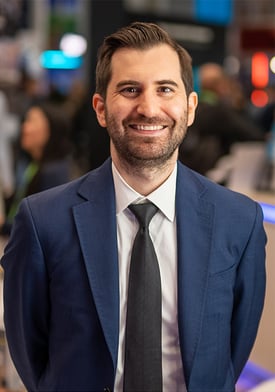
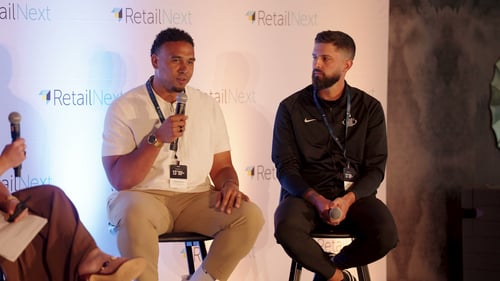
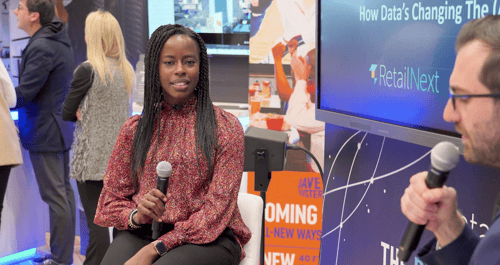
Joe Shasteen: Hello, everybody. Good morning. Thank you all for attending today's second fireside chat. I'll get into a little bit, but just again, just for everybody who might be unfamiliar with RetailNext — I'm Joe Shasteen, Global Manager, Advanced Analytics at RetailNext. And RetailNext is the leading retail intelligence platform, providing foot traffic analytics and providing profitable insights for retail locations across their different brands. Our AI-backed solution consolidates multiple retail analytics capabilities into one unified platform, delivering strategic business insights to bring profitable ROI across multiple stores. We work with over 500 retailers in 100 countries to help them leverage the power of one percent, which can lead to significant profitable ROI and insights. So with that, I'm very excited to have Jimmy Elzaky, the CEO of Toska Spa, with us here today. So Jimmy, would you mind please just giving a quick introduction and talking a little bit about your time at Toska, as well as your history in the luxury market as well?
Jimmy Elzaky: Thank you, RetailNext and Joe, for having me today. As Joe mentioned, I'm Jimmy Elzaky. I'm CEO of Toska Spa and Facial Bar. I feel like a RetailNext veteran. I've been here since the beginning, and every brand I join, I'm like, oh, we need RetailNext. So I implemented RetailNext a couple companies ago. I was global head of operations for another skincare brand, Dr. Barbara Sturm. We implemented RetailNext around the globe, and it really helped us analyze store data, store locations, foot traffic, all the things. And then second time around, we implemented it at Biologique Recherche, where I was the head of real estate and retail there — implemented RetailNext around the world. And then, of course, third time's a charm at Toska Spa and Facial Bar. We just implemented it late last year in our two flagship locations in Charlotte and in Nashville. And for those of you guys who don't know the brand, we're a luxury spa brand that's based in Charlotte, North Carolina. Then we have a second location in Nashville. We had some test markets in Miami and in Dallas, which are no longer, and now we're really focused on those two flagship locations, and we specialize in niche European skincare brands.
Joe Shasteen: Yeah. It's very fascinating that you've implemented this now in three separate companies, and especially in the luxury market where sometimes there's some hesitancy to actually implement this, worrying that it might take away from personalization. So what have you found that kind of was the impetus for you to initially start to get a traffic solution in, your first time doing it, and now at Toska? How has that kind of developed over time, and how are you using the data to really enhance that personalization experience?
Jimmy Elzaky: You know, it's really interesting because for certain markets, it's testing whether a street store or a mall store makes more sense for us. So using the foot traffic to see the busier days — do we have the right staffing model on the days where we need the staff? And then other things, we utilize the heat maps a lot as well for merchandising, customer journey throughout the spaces. I've had different roles over the years, so in each role I kind of implemented it and analyzed it differently than I would otherwise. So let's say, for instance, at Sturm, we had a global database of stores that all had RetailNext cameras. So for that, it was great to see how traffic trends were in different markets and different countries. So maybe in certain countries, weekend traffic was higher than in other countries, or peak times of the day. And then with implementing new stores and doing research on new markets, it was really great to see what type of store model works best for us based on the data. Now at a much, much higher level, I just want snippets and highlights of where the key point in the data is. Where is the room for opportunity? How can we utilize this to make us even better? And I think for us, our entire ethos is service, right? AI can't give you a facial. AI can't give you a body massage, so you have to come and see us. And I think the biggest part for us is how do we use the data in order not to sacrifice that service — to make sure that every single person gets seen and touched and the experience that we want to give them.
Joe Shasteen: Great. And you're in kind of a unique situation, being in such a mixed-use retail market where some of your customers are coming into the location for sixty to ninety minutes for a treatment, versus some of your customers are coming in only for five minutes to make a purchase. So with using the data, how are you able to deal with those two very different types of journeys, making sure you have the associates ready to meet them where they're at and get them to potentially convert? How do you handle those two very different types of customer journeys?
Jimmy Elzaky: Yeah. I think our customer spends a lot more time in a store than you normally would if you walked into, I don't know, like an Aritzia or Uniqlo. You know, our customers are coming because they're coming with intent. They're not coming to browse, right? You make an appointment, you come in, you're getting a service, you're spending x amount of time in the space. So our average customer spends about ninety minutes in our space from checking in, getting into their treatment, coming out, getting a recommendation, and then leaving with their products. It's hard, because when you have a high influx of traffic, it's really, really important that you have the right level of staff and the number of people on board. Because once you have all these people and not enough to service the client, that's where the service really gets sacrificed, and that's where the subpar customer service comes in, and that's really the detriment to the business. So for us, it's so important that we know when these peak times are and we have enough staff on the floor. Because for us, we're fortunate where we have a rich database of people. It's not so much acquiring new customers, it's maintaining those clients and really making sure that every time they walk in the door, we're able to wow them over and over and over again. And I think that's the hardest piece. So the data really comes in handy there.
Joe Shasteen: How does it work when you have people coming in for a treatment versus actually getting them to maybe make a purchase from the retail side of the business as well? Or those people who maybe are coming in for the first time, exploring a little bit of what the retail is, and getting them to book a service? How do you kind of handle combining those journeys, or making one customer who might initially be a treatment customer come back on the off days when they're not getting a treatment to maybe buy some products? Any strategies there that you've implemented with your CRM to drive those?
Jimmy Elzaky: Yeah. So we rely super heavily on CRM because a big part of our business model is personalization. So when you have thousands of customers, you need to be able to keep track of what their skin type is, what type of products they're using, what concerns they had the last time, any big occasions that are coming up in their lives — whether they're getting married or they just had a baby, so they're postpartum, or they're trying to have a baby. There's so many different things, right? So for us, there's two types of customers. We do have our walk-in customer, and usually the walk-in customer turns into the treatment customer, because the goal is to get them to buy into the business. So a lot of time, people that come in are a mix, whether they're new clients who are curious or they're existing clients who just come in — hey, I know what I need, I'm just going to refill this and I'm going to leave. The other part of it is you have that client that comes in on a monthly basis, right? So they booked their appointment, they're coming in, they know what they want, but they might not be purchasing every single time, because this is just kind of like something on their to-do list. They're checking it off, they're coming in. But from a data standpoint, about forty-seven percent of our clients post-treatment make purchases, which is a pretty strong number, and forty-five percent of our traffic is converted into sales.
Joe Shasteen: Kind of along those lines, there's often a perception in the luxury markets that using data might take away from the personalization touch. But how have you been able to use data to enhance that personalization and ensure that your customers are being treated the way you want them to be treated, so that they're going to come back every single time for that treatment, and you're going to maintain that standard within your spa as being the leader in the markets that you're in?
Jimmy Elzaky: Again, it goes back to the proper staffing, right? You think of a luxury experience as being high touch, high customer service, high personalization. So when we don't have enough people to meet the demand of the clients coming in, that service suffers. And then you're rushed, right? Because the associate is standing in the store, they have anxiety. There's three people. There's only one of them. Someone's asking them a question. You see the other person, they're impatient. So they're rushing this customer to get to the next one. And that's where you really lose the magic. So for us, the staffing and having the right people in the right place at the right time is the hardest thing to master, because some days you get this crazy influx of people that you didn't expect. Right? And it's like, how do we service those? How do we touch every single person and make sure that they feel special and they've gotten this expert curated experience in our space, which is really what we've become known for? Like, in Charlotte, in that market, we are the crown jewel of spa. When people think of luxury spa, they think of Toska Spa because of that personalized one-on-one care, down to the treatment. You might pick a treatment online that you want to do, but you come in — we have two different skin types, we live in different climates, we have different lifestyles. It's not cookie cutter. We're going to tailor it exactly for what you need, and exactly for what I need, and that's really what makes it special. But when you're on a time crunch, it doesn't always land the same way.
Joe Shasteen: Kind of along those lines too, with using the data on the retail side of your business — you were talking a little about the products that you have that you're selling. So how have you been using some of the traffic data, or the customer journey data, in order to understand a little bit more about which of those products you want to continue to have in your space, versus which of those might be starting to phase out over time, and maybe bring in new products as well?
Jimmy Elzaky: A big part of our business model is we really focus on spa-only products, or brands that are not widely available. So not something you can buy at a Sephora, an Ulta, a Nordstrom. You really have to come to a spa to get a consultation, speak with an expert, someone who's trained on these products, because a lot of these products are very close to being medical grade. So it's almost like if you use the wrong thing, it could have the opposite effect of what you want. And these brands are not usually ones that are readily available in the market. So it creates a need for people to come see us, because they can't just go anywhere and buy these brands. A lot of things we've done, especially with merchandising, where we've seen certain brands not moving as much — is it the staff not pushing it, or maybe the location in the store? Maybe we have like a dead zone. So it's like, okay, looking at those heat maps and seeing, okay, maybe this corner is not where we put something we're trying to move. We could put the best sellers there because they're going to sell regardless. And in, let's say, the hottest place on the map, that's where we put something that we want to push, whether it's a new launch, something that has a short shelf life when we need to move it — that's where we're going to put it. And in terms of brands, we're very selective on what we bring in. Again, there's brands that we do carry now that have become more mass market as the brand has grown, and we've slowly phased those out, because now it kind of goes against our ethos. Because it's like, if it's available across the street at Sephora, what's making them come to us to buy it?
Joe Shasteen: Kind of the last question, just a little bit around all the talk around AI and how you can implement that. So how have you started to implement AI in what you do on a day-to-day basis? And what are your plans, and what are you excited about in the future in how you can best use AI?
Jimmy Elzaky: This has made my life so, so easy. Because, you know, I'm sure you guys get a twenty-five page contract, or you get these crazy emails from people, and I'm like, I don't know what this legalese is. Like, I need someone to decipher it. I don't want to call my lawyer. So we use it — you know, a lot of people say we're replacing our employees with AI. I'm replacing the busy work that I don't want to do with AI. So it's reviewing contracts, deciphering legal things that we get, helping us create marketing briefs. A lot of times you have the idea in your head, but you don't have all the pieces. So you kind of just throw in a bunch of words and ideas, and then it curates something for you. It helps us with Instagram captions, keeping up with socials, and just little things that we don't need to waste our time doing. Or maybe I just have a question that I don't need to bother somebody about. I'm like, let me ask AI first. And then if I really don't understand it, then I'm going to go bother that person. So it's freed up a lot of time for us, which is great. Also, just in general, when we get certain inquiries or we run into certain roadblocks and we need outside advice, we'll use it for that. The most exciting thing I'm really, really excited about is our POS system is not really the best at reporting, so what we're able to do is upload a bunch of reports and just have it create the ideal report that we would want in the system. And that makes our life so much, so much easier. So lots of different things we use it for.
Joe Shasteen: Thank you so much for your time today. Really appreciate you walking through how data can be used not to diminish the personalized touch in these luxury spaces, but actually enhance it, and ensure that you are getting those repeat visits and maintaining your brand image, especially in those markets. So thank you very much.