MerchandisingMarketing & CXStore OperationsThought LeadershipIndustry Events Traffic AnalyticsInsightsAurora Sensor
Stores As Experience Centers: Merchandising, Design, Community
May 27, 2026 · Jimmy Elzaky, Luxury Retail Executive · Emily Dougherty, Senior Director, Retail Operations and Experience · Laura Gonzalez, Head of Visual
Physical stores are being repositioned as experiential destinations rather than transaction points. From in-store events to service-based offerings, retailers are rethinking what happens inside their four walls. Emily Dougherty, Senior Director of Retail Operations and Experience at Kendra Scott, and Laura Gonzalez, Head of Visual at Marine Layer, join moderator Jimmy Elzaky to compare notes from two brands growing fast on very different curves — Kendra Scott from 48 stores to 175 over a decade, Marine Layer from roughly 40 to 55 in two years.
The panel gets specific about merchandising and store design: the decompression zone that pushes the front table back and gives shoppers room to arrive; Kendra Scott moving cash wraps to the back so the color bar and custom engraving become the visible energy of the store from the window; Marine Layer rebuilding cash wraps as hangout zones with bar stools and a board game, and cleaning up assortment so the product on the catalog cover is actually in the local store. Both brands describe customization — color bars, patch bars, hat and boot personalization — as the mechanism that makes a customer part of the design rather than a spectator behind glass.
They also cover the harder half of experiential retail: how to build community credibly, why hyper-local partnerships outperform national ones, how to hire for a store where events and philanthropy sit alongside selling, and what to measure when an event draws a crowd but not obvious revenue. Emily walks through new customer acquisition, loyalty, and NPS as the proof points; Laura explains why Marine Layer added passerby cameras to understand how many people walk by and stop at a window. The session closes on AI, and where both brands see it earning its place — giving store teams their time back rather than replacing the human connection the whole format depends on.
Key takeaways.
- Experience is operationalized, not improvised. Kendra Scott builds everything around making a difference in someone's day, then deliberately removes the barriers that stop team members from acting on it — so the small gesture is a repeatable system rather than a lucky moment.
- Move the transaction out of the spotlight. Kendra Scott moved cash wraps to the back of the store and brought customization to the center, so the energy is visible from the window. Marine Layer rebuilt the cash wrap as a hangout zone with bar stools and a board game rather than a place to be processed and moved along.
- Give shoppers room to arrive. Both brands adopted the decompression zone — pulling the front table back to leave open space at the entrance — and both report it changing how the store reads on entry.
- Fix the assortment before the fixtures. Marine Layer's first unlock was not new cabinetry but making sure the product a customer saw in marketing was actually in the store they walked into.
- Hyper-local beats national in community building. Kendra Scott staffs a community engagement role in every store and finds the smaller and more local the partner organization, the stronger the loyalty it builds — it does not need to be a large 501(c)(3).
- Hire for the format you actually run. Kendra Scott hires “on DNA and not resume,” recruiting from hospitality, marketing, and PR because the job spans events and philanthropy as well as selling. Marine Layer starts with a vibe check and small generalist teams with a visible path to district manager or head office.
- Measure the experience, not just the crowd. Events are expensive in labor, so Kendra Scott tracks new customer acquisition, loyalty, and NPS — and finds the stores with the most loyal customers also convert highest, because those shoppers arrive already knowing the brand.
- Traffic that never comes in is still data. Marine Layer installed passerby cameras to count who walks by and, next, who stops at the window — the measurement that tells them whether a window investment is working.
- AI's best case is handing time back. Kendra Scott replaced a 90-page printed SKU binder at the color bar with customization mapped into the POS. The reaction from store managers was tears and celebration — because it returns their best people to the customer.
Transcript
-
Read the Transcript
[Opening montage from the Executive Forum sizzle reel.]
Alright. Welcome everyone. Today we'll learn things about retail in all different capacities. Retail done badly is the worst business in the world. What AI will never do is replace that human connection which we value so much. Conversion was that metric that we tied to as performance.
Jimmy Elzaky: Alright. Hi guys. We're going to be talking about in-store experience a little bit more in depth from what we talked about earlier this morning, and more so stores as experience centers, and really creating that emotional and connected experience within the stores. I'm joined today by Emily and Laura. I'll let you guys introduce yourselves, and then I know most of you in this room, but I'll tell you again who I am.
Emily Dougherty: Hi y'all. Emily Dougherty. I'm the Senior Director of Retail Operations at Kendra Scott, and I have the pleasure of working with our new store opening teams, our training and education, communication, and ops. Been with Kendra Scott for ten years, so I've really seen the boom — I think I started at store number 48, and as of yesterday we just opened up store 175. So it's been a busy, busy ten years with them. Thanks.
Laura Gonzalez: Hi everyone. I'm Laura Gonzalez. I'm from Marine Layer. I'm a director of VM, so visual merchandising. So what does that mean? I dress mannequins. Just kidding. Make the store look pretty — also what I've heard. But I've been with Marine Layer for a little over two years. And I just love it. And if no one knows what Marine Layer is, I'll see you tomorrow at South Congress.
Jimmy Elzaky: Amazing. Thank you guys. And for most of you guys that I don't know, I'm Jimmy. From the last time we were all here, I was formerly the CEO of Toska Spa, a luxury spa destination around the country. We recently sold the company back in March. Prior to that, I was helping prestige skincare brands scale their retail footprint within the US at brands like Biologique Recherche and Dr. Barbara Sturm. And now I'm a luxury retail consultant for brands that want to grow and expand their retail footprint within the United States and globally as well. Should we get started? Last year I was sitting in their position, and one question that we talked about in a similar panel was a retail experience that really stood out to you. I know we can all talk about experiences that suck and that are not great. So what's one amazing retail experience that stood out to you recently that you've experienced — whether in a store, a grocery store, a dry cleaner? Tell us.
Emily Dougherty: What's so funny is we use this same question when we start teaching about our service model in stores, and it is because the most common experiences are usually the poor ones — those are the ones that you tend to remember and talk about a lot. So I'm going to talk about the positive ones. And I am a shopper. I'm really good at it, I feel like. I'm an amazing consumer. So I have a lot of great experiences, luckily. But one consistent one that I've seen is with the brand Evereve. I don't know if anyone is familiar — women's boutique. I just feel like they do a really nice job with balancing the employee connection, product knowledge. But most recently, it felt like everything I wanted in the store was gone, was out of stock — apparently the most common size to have ever existed. And the associate helping me, she didn't miss a beat. And I think what I really loved was she was using the tools at her hands, which was that omnichannel experience. And she was ensuring that everything I wanted, she would find it. She wasn't going to let that sale go past her. And I just really appreciated that, because I am normally also an online shopper avidly. And if you don't have it in stock, I don't want to have to go home and order it — I'm already in front of you. And she actually ended up getting three separate transactions out of me in one visit. So I said, that is great conversion on her part out of one traffic.
Jimmy Elzaky: Amazing. So you're telling us you're a sample size.
Emily Dougherty: Yeah, I wish. Just apparently the most popular size.
Jimmy Elzaky: What about you, Laura?
Laura Gonzalez: Okay. So it takes a lot to wow me. I've been doing this retail biz for 25 years. I was a baby model — just kidding, it's after lunch. But for me, I know there's beautiful stores, there's pop-ups, there's this whole experience, but for me it's really the connection with the people who work there. And I recently moved and I was so excited because there was a drive-through Starbucks. So on my commute in I can go to Starbucks and get my drink and be in traffic for two hours. And so them knowing me and knowing my drink order and asking about my dogs was just so much better than them writing a fun saying on my cup, to be honest. And then they asked about me — oh, what are you doing today? I'm like, getting my hair done. They're like, so am I. I don't know. It was just like, oh my god, I love these people. And I was like, this is on my bucket list, to be really known at a Starbucks that they know my drink order. So I'm good now. But yeah, really loved that. And see, it's something so small as a Starbucks that really made an impact.
Jimmy Elzaky: Cool. Alright. Let's get into it. I think we're going to start with kind of how physical retail has evolved. I know now it used to be like A.D., B.C. — now it's like before COVID, after COVID. So when you think about the role of physical retail today versus five years ago, what do you feel has fundamentally changed over the years? I guess B.C. or A.C., after COVID.
Laura Gonzalez: Yeah. I think we learned a lot from COVID, and I think it's human interaction. Like, people were starving for it. And I think we were going to a place of so much — which is fine — was a lot of digital, and now I feel like we're going back to analog in a weird way. Like, we just want people to come in, and it's about community. It's like, okay, I'm going to just come in the store and just talk to the person and then just go get a dog treat and just tell them about my day. And then it's really where we are putting our locations is really important to us. Like, it's about lifestyle, neighborhood. And if we do go into malls, there are malls that are no longer connected by big brands, but connected by like an Eataly, because people are coming in for that experience and having a whole day of it. Like, I always reference The Grove in Los Angeles — it's such a huge mall, it's an experience, you can spend the whole day there and you can go back the next day and still do more things. So I think that is a big thing of where we want to bring people into our store, and what is going to be that draw to come back and back and back. That's for me.
Emily Dougherty: Yeah. I have a lot of the same views. I think the biggest difference for our business and our business model post-COVID was the introduction of that omni experience and us fulfilling BOSS orders and having that BOPIS pickup. And so that traffic turned into someone who was coming in to be very transactional, and we really focused on slowing down that experience and taking it as an opportunity to blend that commerce, that transaction, but really with our store culture. And so finding ways to keep them in the store longer. Yes, you're picking up your BOPIS order, but I actually just want to connect with you even if it doesn't turn into a sale. Let me give you a reason to return for next time, show you what else you were missing out on by making the online order versus coming in and spending time with our team and having that full experience.
Jimmy Elzaky: Amazing. Yeah. I've also noticed, just from — I'm also a professional shopper like you — that the store experience has really evolved and changed, and it's a lot more experiential, which is what we're here to talk about. So there's a lot of this buzz, right, around experiential retail. How do you guys feel that you've been able to successfully do it in your businesses to drive repeat business and drive loyalty, if you maybe want to share some examples?
Emily Dougherty: Yeah. I think we have a couple different mantras at Kendra Scott, and one of them is our service model. And within that, everything we do is built around this one idea of making a difference in someone's day when they walk through your door. And recently Will Guidara wrote a book called Unreasonable Hospitality — and here's a plug for him if you haven't read it. You might think it's just a restaurant book, but it really is also a retail guidebook on that idea of hospitality. And it was really leaning into those small moments of impact in the experience that truly change the environment of the experience. So that's what we've really been focused on — even almost operationalizing that is removing the barriers for our team members to be able to find those small moments. So it's as small as a shopper is in your store and she's explaining to my team that she's actually buying a necklace to go to her mother's funeral. And my team asks enough questions, they figure out her mother's birthstone. And without having to ask for permission, they gift her the necklace with her mother's birthstone. It's just that little moment of impact that we are listening to you and we care deeply about your experience in the store.
Jimmy Elzaky: Yeah. And I feel like something like that is like you remember that for the rest of your life. I mean, how could you forget? You tell everyone.
Emily Dougherty: Yeah. It goes up on the Google review. But most importantly, they'll send an email back to us, and we do a great job of storytelling those moments of impact so that our teams are driven to repeat them and find their own way to express that and have that connection with the customer.
Jimmy Elzaky: Yeah. And I think it's a lot more than just like, oh, I got a free necklace.
Emily Dougherty: It's simple. So impactful. We've called and made dinner reservations for a client before who's visiting from out of town, right? What's your favorite restaurant? Don't worry, I've got you. And we'll make a quick phone call for them. Like, it's anything you can think of. To your point, it's not just about giving them something, but it is those little moments that make the biggest shifts.
Jimmy Elzaky: So if we want to go to the hottest restaurant, you walk into Kendra Scott, they're going to make you a reservation.
Emily Dougherty: I got you. I got you.
Jimmy Elzaky: What about you, Laura?
Laura Gonzalez: Yeah, don't go to Marine Layer for that. I think for us it was a big turning point for retail, as in our CEO and COO — two best friends who started this company in 2009 because of a soft t-shirt that got thrown away, and he wanted to make it and for everyone to feel how amazing the shirt was. And retail, the stores, were just — they were doing great and they looked good, and it was kind of like, hey, we need to grow up and we need to relook at what our stores are looking like, and have a store design team, have a VM team. And what does that look like with our new fixtures, the eclectic tchotchke that we put throughout that kind of tells us who we are — this fun, whimsical, cool California lifestyle brand. And so for that we really relooked at our store experience from just walking into the store. It was a big unlock for us and investing in retail. So when I started it was like 40-ish stores, and so now we're pushing to 55. So we're hopefully in the same trajectory as Kendra Scott. So I can continue with this, but it's just so amazing to have that drive from a CEO who is so invested in the store experience and reconnecting with that, versus just website, website, website.
Jimmy Elzaky: Cool. Let's talk a little bit about merchandising, store design. I know, Laura, that's a very big part of your world as well. So how are you guys thinking about layouts and merchandising today versus maybe a couple years ago? And I know someone had mentioned they pushed the front table back like eight feet and the sales went up, and to me that's crazy, but I love it. What are you guys doing now to kind of maximize? And also, do you feel like your layouts and your merchandising are more for efficiency? Is it more transactional? Is it to showcase and highlight new things? And this was on your slide, right?
Laura Gonzalez: Yeah. Alright. So this just shows all the stores that we've done this year. So this new look and feel of ML with these new cabinet fixtures, with this beautiful wood with brass legs, and our forms, and the tile work — every detail is handpicked by our CEO as well, with even our branding. We have a muralist. It's not just a cling that we put up. But one of the things, not even going into the store, what we worked on was cleaning up the assortment. So what you see from a marketing perspective, that product would be in the store. And you think, well, that sounds really easy. It's not. There would be certain things that you would find on the front of our catalog that would not be in the local store that you're at. So it was first cleaning up the assortment, so the product that the customer wanted was there. And then making these beautiful stores and making sure that the way we're showcasing it is presentable. It's showing an emotion of, I can wear this — wearability. It's easy to find. But what we also created was just these destinations where you'll see this on the next slide about the cash wraps, of the evolution of that. More of just not this transactional hub, but more of a hangout zone. So the first photo is our Madera, the middle one, the biggest one, is our Corte Madera location in California, which is just on fire, insane. And it has bar stools, there's a Scrabble game there. You can hang out. But it's more of like they can entertain around it, have conversations, and it's not this move to the next customer, move to the next customer. It's just this fun thing. And you're also going to see on the last photo, we have a patch bar at the SoCo location. So you have a patch machine. More to come with that.
Jimmy Elzaky: I love that. I can't wait to check it out tomorrow.
Emily Dougherty: We've actually had quite a few iterations of our store design lately, and the most current one — we've seen someone hinted on a little bit earlier — was the decompression zone. And like you talked about moving the tables back like eight feet, we saw that too and have integrated that into our stores, giving just a little bit more space as soon as you walk through the door. But the other big change that we've made starting this year is we've always been known for our color bar — which, plug, everyone's going to get to experience tomorrow on the store tour. This customization zone we used to place towards the back of the store, and that's where all the energy and the excitement was living, and we were missing out on the customer walking by being able to see it from the window. And so now in this last year, our cash wraps we've moved to the back of the store and brought that customization hub to the center, and really having that energy bring in and breed more energy. So color bar and custom engraving, and so that playtime for the customer and our associates being the main focal point of our stores. We also have another brand at Kendra Scott that we're launching with, is our Yellow Rose brand, and this is our more western wear. We're now up to five stores for this one, and I think their layout is similar in the fact that they have the decompression zone in the front. Their design and aesthetic, completely different. You are not confusing the two brands. This is very found objects and rustic, and it does a really nice job of telling the story of the brand. But also some things are the same. The area to play and customize is ever present within Yellow Rose as well. They have their own color bar. They have hat customization bar, which is so exciting. We also do branding on our boots, a patch bar — just any way that we can really make the customer just a bigger part of that experience.
Jimmy Elzaky: I love that. I'm excited for my Kemosabe wannabe hat. Cool. Let's dive a little bit into your community building. I know you guys talked a lot about how you're laying out your stores to grow with your customer, kind of change the interaction. From a community perspective, many brands are building these community hubs and spaces where people just come to hang out and experience the brand, and it's less of a hi, come buy something, and come just be part of our crew. What are some community building activities? What does that look like for your brands?
Emily Dougherty: Yeah. I think this is a space where we really thrive, and it's been a part of what we do since the beginning of our 20 years in retail stores. We talked about the color bar, but that's also where we host events. So you can host a color bar party. But our main pillars are family, fashion, and philanthropy, and I think the philanthropy aspect of our business is what truly connects us to the community. The other thing we do is we really encourage our store teams to own that community engagement, and there is an employee in every single store whose job it is to have that marketing and community engagement. So we found that the more hyper-local the organizations that we partner with, the more success we have, and it builds the better loyalist within our customers. So we had a local story where our store manager in Greensboro was driving into the store one morning listening to the radio, and she heard a story about a little girl named Lila who had cancer. She went viral on social media with a “Taylor Swift is my friend” comment. Next thing you know, Swift is donating money for her cancer treatments. Kelly realizes this took place in her backyard, reaches out to her on Facebook, and then two months later we're having a massive 300-person event in store, and the entire community is coming out to this event in the store to build jewelry, where 20% of everything that's purchased goes back to this family directly. Like, it doesn't have to be a large 501(c)(3) organization. We can help the actual people in our community. And then those customers turn into people who stop in our stores sometimes once a week just to hang out with our store employees. It's quite awesome.
Jimmy Elzaky: I love that. That's so awesome. What about for you, Laura? You're like, can I top that, right?
Laura Gonzalez: Okay. Taylor Swift. Okay, well, we don't. I think it's ever evolving for us for community. For community for us, it's just we have a lot of locals who come by, who always check in, who always bring in their dog. But for events and stuff like that, that's something that we just want to look into and grow into. We do a lot of internal things. We had someone who was diagnosed with cancer and was part of the marketing team, and the CEO was like, you just be off until you're off, we'll be paying you, until you recover. And we had one sales associate whose place flooded, and we're like, we'll pay your rent until you get back to where you need to be. So there's these little stories that we just don't hear about, but it's what drove — what I connected most with Marine Layer is this community, but also family, that we always look out for one another, and we're always very supportive. I came from a bigger retailer where it just felt like I was just a number versus a human. And so that's what I love about this company. Obviously we want to be like Kendra Scott, which is great, and take notes, bring that back. But I think it's just ever evolving of how we can really connect and do things locally in our community with anything like food drives, clothing drives, because we have a lot of samples, we love to give away our product all the time. So come by if you're sample size.
Jimmy Elzaky: Send us the times and dates.
Laura Gonzalez: I know. If you're sample size.
Jimmy Elzaky: I'm a small. Okay.
Laura Gonzalez: Yeah, you work perfectly.
Jimmy Elzaky: But yeah, amazing. Of all these experiences that you guys have been doing, what type of in-store events or activations do you guys find to be the most successful to, let's say, drive loyalty and revenue rather than just traffic to the store? Because a lot of times, as a retailer myself, you throw these events and you get like 500 people, and then at the end of the day it's like, oh, we made 500 dollars but we spent ten grand on this event. So what have you found to be the most successful events that you've done, or maybe a format?
Laura Gonzalez: So we have local events which can get kind of cheap and cheerful, but it's like we have Google and Facebook that are close to our Palo Alto store and they want to do an event, so we let them in, we let them have fun, they can do whatever they want, we give them a discount code, it's great. We also did something last year where we had these two pop-ups, so we decided to do two on both coasts, east and west, and call them two different things. And we learned a lot, which is great. We're going to do another one this year. And so we had the Custom Club, which you see in the Fillmore in California, and then the Patch Bar Speakeasy in Nolita. Both were kind of doing two different things but had one common goal, which is to be a customization shop. We did a lot of events at the Speakeasy to drive that traffic, but also just to drive people to know who ML is. So we had a comedian there twice, we had a tarot card, we had a photo booth, we had a lot of influencers who were kind of up and coming influencers versus high influencers. And this was open from October to January, and we were just about to close the Patch Bar in January, and then we got an influencer who was like, can I do an event because it's fashion week and we want to be there? We're like, what? Yeah, yeah, yeah, whatever you want. You want some cashmere sweaters? We got you cashmere sweaters. So it was fun, something new, and a big unlock for our marketing team to drive this awareness. So we're up for anything.
Jimmy Elzaky: Amazing. What about you, Emily?
Emily Dougherty: And so I think for us it's all about customization events. Within our color bar parties, we have Kendra Gives Back events. We focus on business-to-business activities. But like I said, our stores are built around this idea for customization in Kendra. And I think what we found is that it is really about the customer wants to be an individual and have a full experience in the store. We've got Sips and Sweets cafes. We've got a boot bar in our Yellow Rose brand. We're just finding new ways to stand out from the customer and not just have that normal jewelry store, product behind the glass moment, but actually make them part of the design experience.
Laura Gonzalez: And then I know what we learned from last year was that it kind of worked when we did these two pop-ups and the people loved coming into the store and patching stuff. We're like, okay, it's like people love stickers. I don't know if you're a sticker fan — you'll get them tomorrow.
Jimmy Elzaky: Big sticker fan.
Laura Gonzalez: I know. I was not a sticker fan and now they're all over my laptop, it's crazy. So we decided to put in these mini patch bars into select stores, so right now we have three, at the end of year we'll have about five. But we wanted to bring in that little vibe that we did as an unlock and bring it into these locations. So it was just something fun. It's on what we're known for — our Cloud Nine fleece and our amazing t-shirts — and we have incredible patches that are so funny. We have like mommy's little meatball, we have guncle, we have a lot of skiing ones, we have cat daddy. Cat daddy, which was our number one, which I gave that to my husband, because we have cats, and that's something weird. And then this year we're going to be doing, like I mentioned, a pop-up in New York in Williamsburg, and this one is all about sweaters, and we're going to make a magical train. And so we're looking into more embroidery and customization as purchasing for gifts for the holiday season.
Jimmy Elzaky: I will be there. I love that. It's like ten minutes from my house. Okay. Cool. So you guys shared a lot about these in-store experiences, these community events. Of course, you need people to execute this, right? So when you're looking at staffing your stores — and I know your roles might not directly involve the hiring process, but as an organization, are you guys hiring differently now considering that these new types of events and activations are such a crucial part of your business? Is there anything specific maybe when your companies are hiring or looking for new staff that you might be looking for that you weren't looking for in the past?
Emily Dougherty: We're looking for unicorns. So, no. I think, again, we really focus on a little quote from Kendra. She says, we hire on DNA and not resume. And because so much of what we do is, yes, sales, and that's really important, but it is also philanthropy and events, and marketing is really important to our stores. We really need some people who can live within this gray area. If you're really into black and white, this is how retail operates and this is policy, you're not going to be a great fit for our brand, and it's going to become really difficult for you to be successful, since we really empower our teams to go above and beyond for the customer. So we're hiring for heart, for a culture fit, for all of those things, but it's not just a retail background that we're after. We do hire from hospitality industries a ton, marketing, PR — all of those skill sets I feel like are ones that really benefit our business. So, yeah, any unicorns you have, send them our way. I think they'll be really happy.
Laura Gonzalez: Hire me. Yeah, exactly. One of our things that we start with is just, it's a vibe check, right? Okay. So which I was like, what? Do I make that? But also, fun is one of our big criteria. It's like we just want to have fun. And retail can be really stuffy, and it can be a lot of processes and a lot of paperwork. We just want to have a connection of someone who can just be out there and have a conversation with someone. I always ask this question if I'm hiring someone, because I used to work in stores, and I would say, can you say hi to me three different ways? And it's just a simple thing, because people are scared to talk to people. Okay? It's scary. And then you're standing in front of a door and you're saying hi, hi, hi, and it's just monotonous. And so it's kind of just like, how do you build a conversation? We also do get a lot of people who, this is their first job, and we love that, so we can mold them. But we are very small and mighty teams. Some stores only have like four people because of how small it is, and so they become generalists versus specialists, which is kind of great, because then there's some growth in mobility, because we really developed a pipeline of where they can become a store manager, they can become a district manager, they can, if they want to come to HQ and work there, they have that flexibility. So we're just giving them this roadmap if they want to continue with this company — or if they want to go to Kendra Scott, they can. But no, I'm just kidding. But it's always good, because it's a great stepping ground to just have fun, and retail doesn't have to be so stuffy.
Jimmy Elzaky: Cool. Alright. So kind of putting all these pieces together, right, all the efforts and all the things — how are your organizations measuring the success of these experiences that you're creating for your clients?
Laura Gonzalez: We all know the numbers. I mean, numbers —
Jimmy Elzaky: Besides sales, right? The dollars.
Laura Gonzalez: You know when the dollars are good, everyone's good. So that's always great. But we measure it with our conversion, which is in our KPIs. We look at our average trends, all those big numbers that we always look at. One thing that we do have that we've installed in a few stores is this passerby camera. So it's a camera that is outside of the store and it counts how many people are walking by us, and it just sees traffic. What we're also going to look into and add to it is the people who stop at our windows and look at them. So a big investment this year is in our windows. We did a lot in this last two years of really looking inside of our stores and making sure that they look the best they could. That's bringing me, bringing a team — two years ago the VM team was zero, now it's four. So that was a big unlock to making sure that the experience was amazing to match the look and the feel of the store. But now we need to unlock the windows of how those bring the customers in. So we have this camera system that's counting everyone that goes by, so hopefully we can convert those people.
Jimmy Elzaky: A camera system that's not RetailNext?
Laura Gonzalez: It is connected to RetailNext. Michael — Michael, I think, is the person who helps us.
Jimmy Elzaky: What about you, Emily?
Laura Gonzalez: You really put her on the spot. I mean, hi. Look where we are. Welcome. I dress mannequins. A camera.
Emily Dougherty: Well, so events are expensive to put on because of labor. And that's something that we're always begging for out of our retail stores in order to go off-site and be a part of these really amazing opportunities. So what's the ROI on all of these events? We're really searching for it, to measure that new customer acquisition, right? You meet us at this really awesome experience or community event. Are we capturing your information? Are you buying into the brand now? Are you then becoming a returning customer? So the new customer acquisition is a major measurement tool for us. Loyalty is the other one. We're in the middle of building out a loyalty branch. I think someone called that out earlier. Loyalty is a big topic of conversation in our world right now. And we have found that our stores with the highest number of loyal customers are also driving our highest conversion. So they're coming into our stores and we don't have to introduce them to who we are every single time. They know that they are coming in for a particular product and we're converting at a much higher rate. And lastly, the other measurement we're using is relying on our NPS scores. So seeing where we measure up to our competition, but really truly in the eyes of our customer — and all of these decisions we're making, the new tools we're implementing, are they giving us the result we want, which is the customer being really happy and satisfied with the experience in the store. And I'm happy to say, I do feel like we are best in class in terms of service and high NPS scores.
Jimmy Elzaky: Amazing. I love that. Kind of in closing, I just want to hear from you guys looking ahead. I know we all talked about AI and then we can't get away from it, but how do you feel that your physical retail presence is going to evolve over the next couple years by integrating AI? Because you're just going to have to, right?
Emily Dougherty: Yeah. And I think what AI will never do, as everyone else says, is replace that human connection which we value so much. But is it making the job easier for our employees right now? And there has been this one technology ask of our field teams for years that we've never been able to get across the board, and that was integrating our customization into our POS system. So at our color bar, you would scan a SKU for a component and then we would pull out this super aesthetic giant binder from —
Jimmy Elzaky: I've seen it. Yeah.
Emily Dougherty: The dreaded giant binder, with about 90 pages worth of SKUs for different stone, every stone shape, every stone size. JJ, all about this — you've seen the SKU book. Our biggest pain point. It wasn't the luxury experience that we're going after.
Jimmy Elzaky: It was like a scrapbook.
Emily Dougherty: It was. And it was my team's responsibility to create this SKU book for the field. So that was ours every single month with every launch, to physically create the book and then either have it printed — another cost. And finally our retail applications team was like, I bet we could use IT to write the code that would integrate this mapping into our POS system. And we've been testing it now, two different iterations, and it's going to go live to the entire field. And when we were on the call speaking to our store managers and told them what AI was about to do for them, there were actual tears, heart emojis, celebrations. And I think if that is what AI can do for us, to save us money, save us time, and put my best employees — give them back that time in front of the customer — then I'm welcoming it with open arms.
Jimmy Elzaky: I think that goes back to one of the conversations earlier about enhancing the employee experience. And I think we've all been behind a register sweating and the customer's in a rush and they're trying to leave, and here you are flipping through this scrapbook trying to find the stone. I'm sure it's going to be a new experience for everybody.
Emily Dougherty: And the inventory win from the profitability side — we're mapping it. So whatever component you choose, the only stones that go in that piece of jewelry are what are going to pop up. And if it takes three stones, you have to click on three stones.
Jimmy Elzaky: Amazing. That profitability aspect is also huge, other areas of the business. Excited for you and your 175 stores.
Emily Dougherty: We're so excited. So no robots in our stores.
Laura Gonzalez: So I'm HQ. So there's a lot that goes into AI from a design and merchandising perspective. So a lot of the sketches that they're designing, they're doing it a lot faster with AI and the tools, so then we can get the product to production. It's a lot quicker of a turnaround. With merchandising, we use reporting to look at all the data that we have of what's selling, what's not selling, and we ask it a question, it gives us something back. So it just helps us look at more strategic and planning of where this product should go — do we want to invest in hot stores — so then it kind of cleans up the store experience. So without the stores knowing we're using it, we are using it.
Jimmy Elzaky: Awesome. Well, thank you both, Emily and Laura. This was great.
Emily Dougherty: Thank you guys.
Jimmy Elzaky: Cool. Thanks everyone.
Featured Speakers
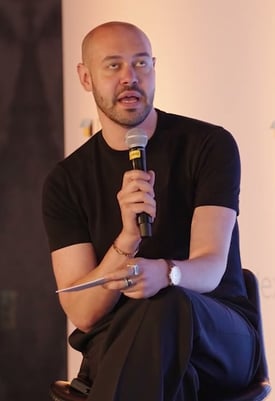
Jimmy Elzaky
Luxury Retail Executive, ex-Biologique Recherche, Dr. Barbara Sturm, L'Oréal
Jimmy Elzaky is a luxury retail consultant working with brands expanding their retail footprint in the United States and internationally. He was formerly CEO of Toska Spa, a luxury spa destination with locations around the country, which was sold in March 2026. Before that he helped prestige skincare brands including Biologique Recherche and Dr. Barbara Sturm scale their US retail presence.
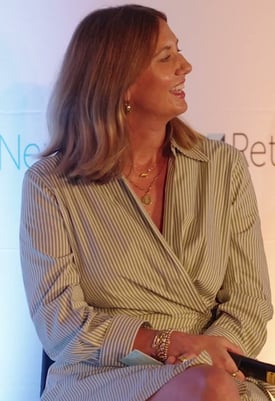
Emily Dougherty
Senior Director, Retail Operations and Experience, Kendra Scott
Emily Dougherty is Senior Director of Retail Operations at Kendra Scott, where she works with the new store opening teams and leads training and education, communication, and operations. In ten years with the brand she has seen the fleet grow from store 48 to store 175, alongside the launch of Yellow Rose. Her focus is operationalizing hospitality — removing the barriers that stop store teams from creating the small moments of impact the brand is built on.
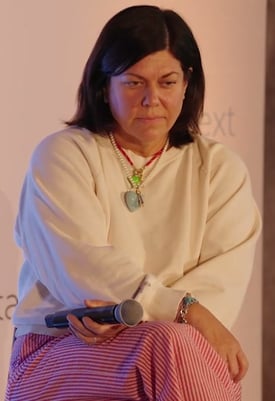
Laura Gonzalez
Head of Visual, Marine Layer
Laura Gonzalez leads visual merchandising at Marine Layer, where she has spent just over two years building the function from the ground up — growing the VM team from zero to four while the brand expanded from roughly 40 stores toward 55. Her work spans the brand's new store look and feel, cash wraps reimagined as hangout zones, patch bars, and the window investment now being measured with passerby traffic data. She brings 25 years in retail to the role.
You May Also Like
Want to See RETAILNEXT IN ACTION?
Talk to our team. We'll show you exactly what RetailNext can accomplish for your business.