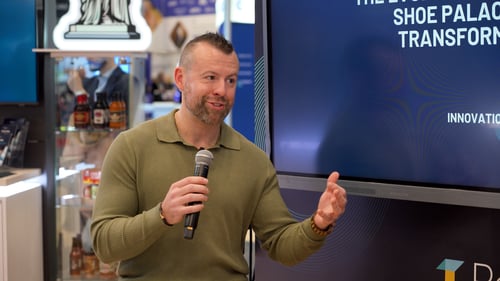
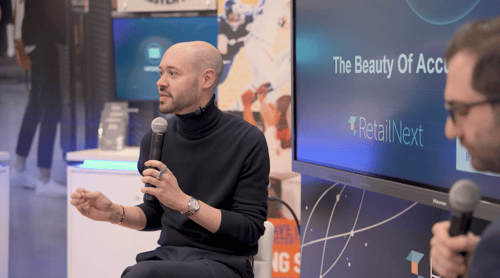
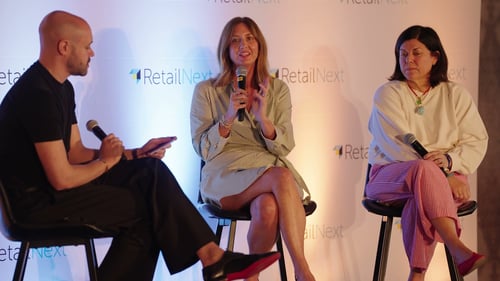
Joe Shasteen: Hi, everybody. Thank you for attending today's third and final fireside chat. Just before we get into it, just a quick introduction. I'm Joe Shasteen, the Global Manager of Advanced Analytics at RetailNext. And for those of you who may be unfamiliar with RetailNext, we are the leading advanced analytics platform for traffic and retail. We help our retailers consolidate data across multiple platforms in order to provide solutions that enable them to generate measurable ROI and profitability based on the metrics. We've worked with over 500 different retailers all across 100 different countries in order to help them develop the power of one percent, which demonstrates what that one percent increase in conversion can do for overall profitability within a retail environment. So I'm very excited today to have Corinne Suarez with me. Corinne, if you wouldn't mind giving a little bit of an introduction.
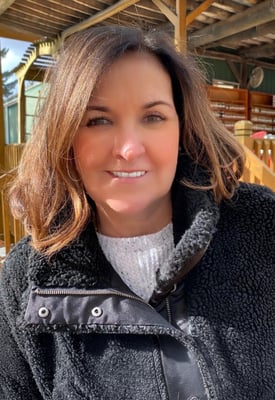
Corinne Suarez: Hi. My name's Corinne. I work for, as Joe said, Marine Layer. Really happy to be here. I've been with the brand about a year and a half, and it's been a really fun ride, I'll say. We're a really cool California lifestyle brand. We have a strong presence online, and we're scaling across the US. So right now, we have fifty-seven stores, two of which are pop-ups.
Joe Shasteen: So it's been really great. We're going to talk a little bit about the pop-ups later, but I wanted to start kind of going back a few years. Marine Layer has a great history in California, great brand presence. But as you've started to expand that outside of California, can you talk a little bit about some of the unique challenges that you've had bringing that brand across the country into different areas, as well as what has been some of the goals of having data-driven solutions for making the decisions on where your next markets are going to be, and being able to leverage the data in order to make those successes?
Corinne Suarez: I think a couple things come to mind when I think about branching out of California, because we are really deep rooted in California. Again, we're a lifestyle brand, super cool and casual. But one of the biggest things is culture. We have a really fun culture. It's a little bit whimsy, kind of snarky, and to be able to replicate that across the US isn't easy. So when you're training new teams and they're really learning about the brand, that's hard. I think the other thing we've come across is remote stores. So we call a remote store a single store market. That's been difficult just from the fact that people don't know our brand. They don't know the roots of our brand. They don't know how we started, that everything's soft and amazing. So really getting that across to the customer has been a bit of a challenge.
Joe Shasteen: What are some of the strategies that you've been implementing to try to deal with that? To try to get your brand awareness out there in those new markets where you don't have that in California, right, where it's very clear? What are some of the strategies you've implemented, whether using traffic data, other data sources, to really drive that and kind of build up that customer base outside of your home market?
Corinne Suarez: We work really closely with our marketing team to really look at our customer profile, our base. We obviously analyze traffic. I think one of the special things about us is we are a smaller brand, so we can be really nimble. And if we find an opportunity, we can go after it really fast. Unlike other brands, where it's kind of bureaucracy and all that good stuff, we have a small mighty team and we can attack it really well.
Joe Shasteen: Kind of along those lines, right? So you've chosen RetailNext to be your partner as you've expanded with this. So what have been some of the capabilities and things that you've looked at when you've been working with traffic or other sorts of data sources that have enabled you to want to make sure you're rolling out with RetailNext in these different environments, so that you ensure you have the data you need?
Corinne Suarez: I think it's the ability to test and learn. Again, we can pilot things really easily, and we can look at the metrics that RetailNext provides, and we can iterate and learn and be really fluid with the brand. There's also a performance comparison, right? Like, we have two stores that had both genders in them, and based on the analysis we did on the business — and the traffic and our customer profile — we decided to make it a men's-only store. So there's a lot of data and analytics that we glean from RetailNext that really help us compile a strategy for the go-forward.
Joe Shasteen: You know, previously in some of our other conversations, you mentioned store types and changing up where you were looking to place some of your new stores — street front versus mall. Could you talk a little bit about some of the data that you've been using to make those decisions on where the stores will be placed in your new cities?
Corinne Suarez: Marine Layer — we've been around for fifteen years, going on sixteen. Again, we're scaling. I think we had to look at, like, what got us here isn't going to get us there, right? And so we were in neighborhoods, and neighborhoods are great, but you have a really confined customer pattern traffic. So we decided about a year and a half ago, two years ago, to start going into bigger malls and bigger centers. And with that becomes more traffic, right? A different customer base — you get tourists. So there's a reach that's a bit different than when you're in a neighborhood. So we're able to look at our traffic. We're able to look at the data that goes along with that. Also, passerby traffic. We understand with our passerby cameras — it provided a big opportunity for us to look at everybody who wasn't coming in, and how can we enhance from our windows, our storefront, from inside our box visually. How could we become more appealing and really appeal to the customer from an experiential standpoint?
Joe Shasteen: Kind of along those lines from the experiential standpoint, and you mentioned some of the newer pop-ups. Could you give a little bit of the history of the pop-ups, or how you're developing those new locations, and what you were trying to do with that new ultimate kind of customization in those different locations?
Corinne Suarez: So this was really our CEO's brainchild. He works with marketing, and we set up a whole project team, and it was really kind of crazy. It was super fast. We like to say, scrappy not crappy. And we decided we wanted to have a presence in San Francisco on a really popular street, Fillmore. And then we also wanted to be in New York and do a cool speakeasy vibe. So we looked at those two locations and we did a completely different experience in both, and it proved out really well. The Fillmore location — it's very colorful, bright, big ceilings, like amazing pops of color, and did really well for us. And actually Q4, it trafficked the highest out of any store in our brand. And that was location, it was marketing, it was really the store experience. And then inside the box, specifically Fillmore, we had customization. So we had a chain stitcher there who was able to customize and chain stitch any of your garments. We also had over a hundred different patches that our marketing and design team implemented. You were able to patch garments. So from an experience standpoint, it wasn't just walking into a retail store and picking out a garment and leaving — it became an experience. And it was pretty wild, because it was across all genders and age, and people just walked in there and really didn't want to leave. We had a photo booth. We put on a lot of events there, which was really great. So I think from an impression standpoint and acquisition for marketing, it was really good for the brand. And then Nolita in New York was a little bit of a different beast, which is — it's a beautiful speakeasy. If you have a chance to go see it, it would be amazing while you're here. But it's in the basement of our regular store on Nolita in SoHo, and it's a beautiful vibe. We have cashmere and all kinds of luxe garments in there that are just really beautiful and soft to the touch. We did a lot of press events and marketing events that have just been gangbusters. So it's just absolutely beautiful, and a different way to showcase our brand and get some reach that we wouldn't have had.
Joe Shasteen: You kind of touched on it a little bit. But in these new environments, what were some of those initial KPIs or really key metrics that you were looking at to try to determine whether or not overall it's a success, certain parts are a success, or what you're trying to change in the future as you expand? What were you kind of focusing on in particular?
Corinne Suarez: Definitely traffic, especially with Fillmore. I mean, we spoke about the traffic. It was unbelievable. But also inside the box conversion — that told us about staffing. I mean, initially, we have small and mighty teams, and we had to basically triple the size of our team within a very short time, realizing what was happening in the box. Also, our average dollar sale was really good and really healthy, especially since we only had soft bottoms. We didn't have a lot of accessories. We just had the patches. So that really gave us an indication of, as far as inventory, and then also UPT, because of the patches and because of customization. We really had to figure out that that was a UPT driver, obviously. But we also had to figure out our technology and how to integrate that with the experience. So it was pretty amazing.
Joe Shasteen: Kind of along those final lines, as you've been potentially expanding and maybe rolling out this concept in new locations, what do you think is kind of your data-driven approach? How do you think that's given you an advantage over either competing in new markets with maybe established brands, or competing with other digitally native brands as they're trying to expand? How do you think that data-driven approach is giving you the tools you need to make the changes you need to be successful in those markets as well?
Corinne Suarez: It's the real-time data that helps us a lot. I think it's the comparative data. I think your platform integrates really well with all of our other platforms. I also think the fact that we're small and we're super agile — like, we can change very quickly. And that's really helped us for strategy, for envisioning what the future could look like. I mean, it's all the data and the analytics — that's the foundation of what we do. So it's been awesome.
Joe Shasteen: Just one final question, just for the future upcoming year. Kind of what are your plans? What are you most excited about for Marine Layer in the upcoming 2026?
Corinne Suarez: Yeah. Well, our volume is growing. We're a little bit north of two hundred million, and I think the last three quarters specifically — I'll talk for brick and mortar — we've had double-digit comps. And then we've also grown top line by over thirty percent. So that's pretty awesome. We want to replicate that obviously in 2026. We're also on a mission. We've touched probably thirty percent of the fleet last year. When I mean touched, we've renovated, remodeled, relocated, or opened new stores, and we're redoing the same thing this year. We're excited. We're exploring the outlet business. We don't have an outlet business yet. So from a liquidation standpoint — but how we show up is really important from a brand standpoint. So we want to make sure that it doesn't look like your everyday outlet, that it's beautiful and there is still a customer experience. And then we're also going to be doing more pop-ups. The success of these two has been unbelievable, and I think whether we turn an existing store into a fun experience or a pop-up, that's great. We're also going to continue with some kind of experience inside the box. We're going to test and learn, and that's what you guys are going to help us with, with the analytics. But whether it's customization or patching or some kind of unique experience that the customer can walk away with, it will be amazing. So that's kind of what's on the road map for 2026.
Joe Shasteen: Well, thank you so much for walking us through how the data-driven approach can really help retailers with expanding into new markets, and especially planning new concepts and pop-ups across the country. Thank you.