NRF 2026 Day 2: Agility Defines Retail's Winners in 2026
On this page
Day 2 of this year’s Big Show crystallized a fundamental truth about modern retail success: speed beats size, authenticity trumps budget, and emotional investment outweighs financial investment every time. From Ryan Reynolds' masterclass in brand building to intimate fireside chats at RetailNext booth #4657, today's sessions revealed how retail's most successful players are winning through agility, not scale.
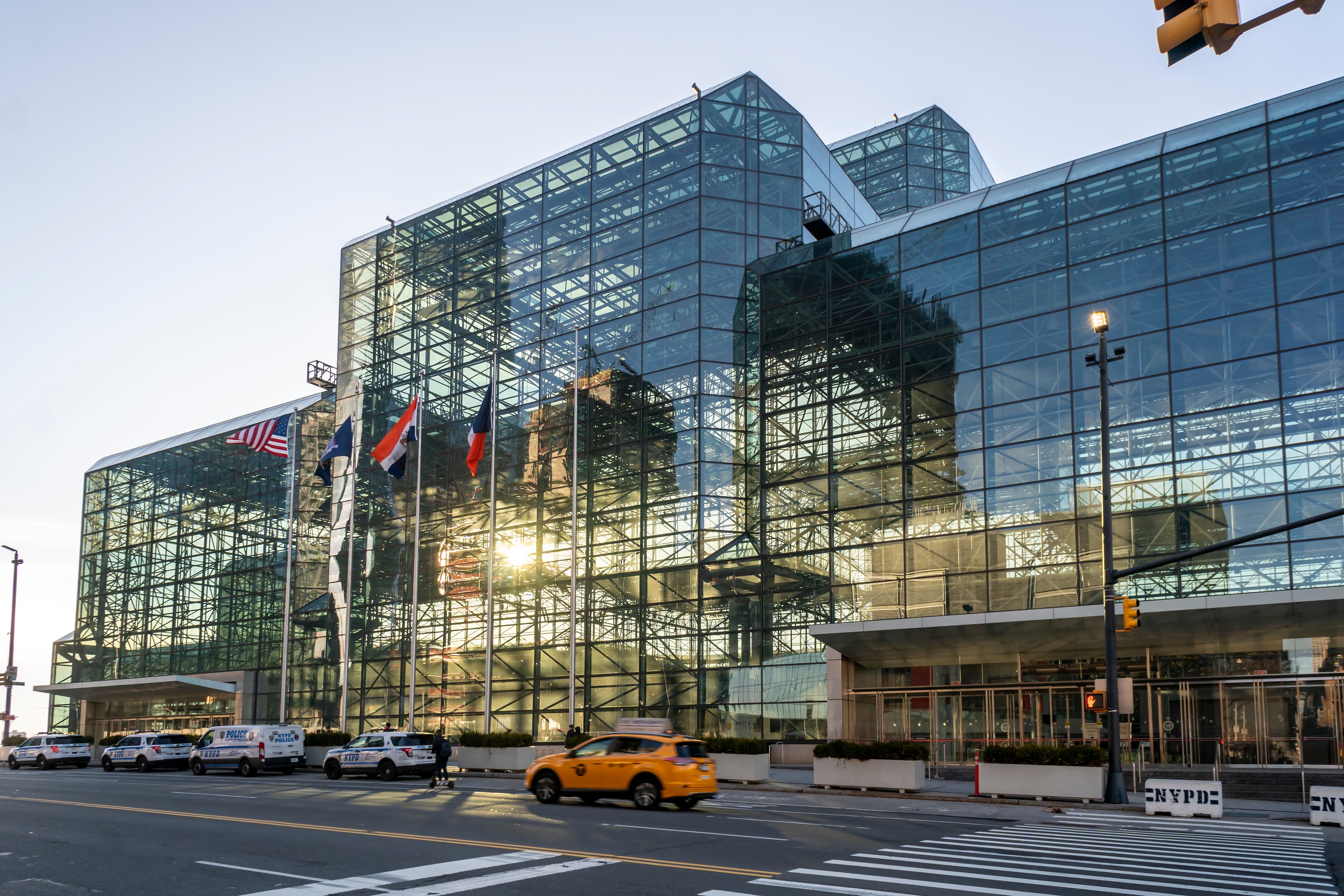
The conversations throughout the Javits Centre centered on a revolutionary shift in retail dynamics. Traditional advantages of massive budgets and established infrastructure are giving way to nimbleness, creativity, and the ability to pivot quickly based on real-time intelligence. It's a complete rewriting of retail's playbook.
GET TO KNOW US 👉 RetailNext's NRF '26 Big Show: Innovation. Agility. Impact.
The New Rules Of Brand Building: Speed, Authenticity, And “Irrational Affinity”
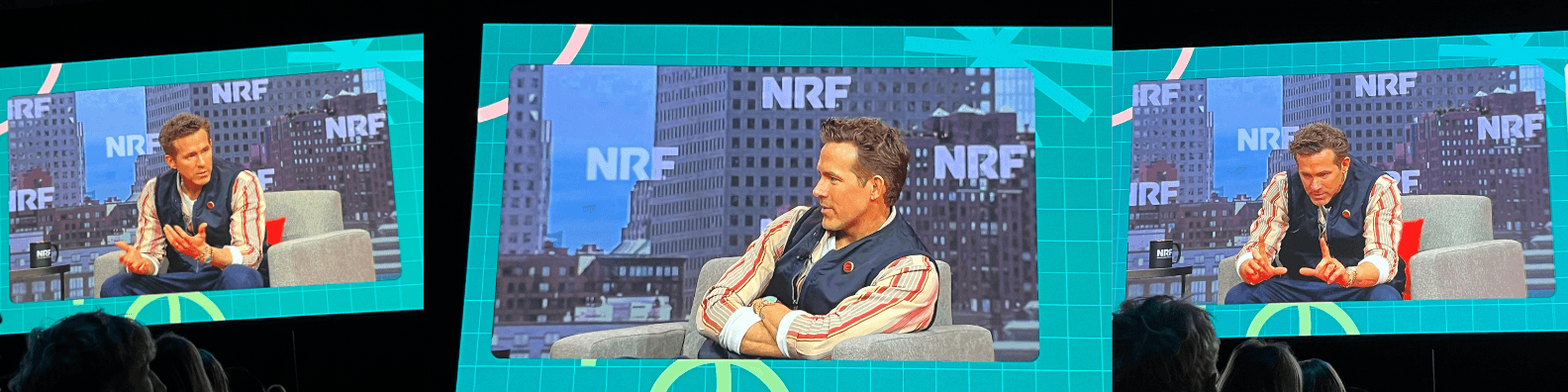
Ryan Reynolds transformed the keynote stage into a masterclass on modern brand building, sharing insights from his journey through Aviation Gin, Mint Mobile, Wrexham A.F.C., and Maximum Effort. His message was clear: success comes from feeling rather than intellectualizing, from authenticity rather than manufacturing, and from speed rather than spectacle.
"The stuff that really works is stuff that I feel really passionate about," Reynolds explained, emphasizing how real always lands better than manufactured. Audiences know they're being marketed to, so the solution isn't to hide it but to lean into it with self-awareness (and a touch of humor).
Projects, Stories, And Products That Matter
The Wrexham A.F.C. story perfectly illustrates his philosophy of emotional investment. What started as a fascination with promotion and relegation systems evolved into a transformative project for a forgotten Welsh town. By keeping the community at the narrative's center and turning it into a Disney docuseries, Reynolds demonstrated how brands can bridge global reach with hyper-local connection. "It's okay to be kind when no one is watching," he noted, explaining how genuine care creates authentic brand stories.
Moreover, is concept of "irrational affinity" revolutionizes traditional ROI thinking. Sports teams, particularly small local clubs, succeed through nostalgia and representation. Everyone wants to feel seen, to belong somewhere. This emotional connection, when properly cultivated, becomes profitable without massive spending. "You don't have to spend so much to get these great outcomes," Reynolds emphasized. "Brand love is key, and this is scalable to small or medium businesses."
Brand Building And The Customer Experience
The constraint of smaller budgets, counterintuitively, drives better results. "Too much time and too much money kills businesses," Reynolds declared. Limited resources force creative thinking, as he learned while making Deadpool with minimal budget. This philosophy of prioritizing messaging over spectacle now applies across all his ventures. Spectacle has lost its sheen; authenticity has taken its place.
Furthermore, speed emerged as the critical factor in modern brand building. "Make sure your brand is part of the conversation," Reynolds advised, pointing to Super Bowl ads that people remember for spectacle but not for the brands behind them. Instead of massive investments in single moments, he advocates for fast follows and earned media. "You don't have to be entertaining, you just have to be fast."
His concept of "micro-authenticity" recognizes that everybody is now a media channel through social media. Small interactions matter, one-to-one investments count, and sharing power, resources, and ideas throughout your brand creates exponential value. This extends to every customer touchpoint, from store greetings to checkout experiences. These small differences compound into significant advantages.
Reynolds concluded with a crucial insight about customer experience: "Frictionless doesn't mean no-contact. Frictionless means the consumer doesn't feel sanded down to their skeleton by the end of the process." Ease matters, but so does human connection. Personable brands that foster genuine relationships gain favor without massive budgets.
Shoe Palace: Six Years Of Sustained Agility Through Data Excellence
David Lizak, Manager of Retail Applications at Shoe Palace, presented a masterclass in long-term commitment to data-driven agility. His six-year journey with RetailNext demonstrated how sustained investment in analytics capabilities creates competitive advantages that compound over time.
Starting in 2019, Shoe Palace evolved from relying on store manager perceptions to leveraging concrete data for strategic decisions. Lizak emphasized how traffic became the baseline for all other metrics, enabling realistic goal-setting and performance coaching across their fleet. The ability to teach store teams simple concepts, like improving conversion from one to two customers out of every ten, transformed abstract data into actionable insights.
The phased implementation approach revealed organizational agility at its best. Beginning with year-over-year traffic comparisons, Shoe Palace progressively sophisticated their analytics usage. They learned to differentiate between mall and street locations, understanding that each format requires tailored strategies and expectations. The introduction of Shopper-to-Associate Ratio (STAR) metrics enabled nuanced labor optimization, not just reducing staff during slow periods but also setting appropriate engagement expectations.
Cross-functional adoption proved critical. Marketing teams use traffic data for activation placement, product teams optimize assortment by location, and operations refine labor strategies. The integration with complementary technologies like StoreForce demonstrated how platform flexibility enables sustained agility as business needs evolve.
Lizak's emphasis on "power hours" analysis exemplified data-driven agility in action. By identifying true conversion opportunities rather than just sales peaks, Shoe Palace optimizes staffing and engagement strategies with surgical precision. This continuous-improvement mindset, built on six years of data excellence, creates sustainable competitive advantage.
READ MORE 👉 How We Help Drive Operational Excellence
Toska Spa & Facial Bar: Agility In A Luxury Mixed-Use Model
Jimmy Elzaky, CEO of Toska Spa & Facial Bar, brought unique perspective as a three-time RetailNext implementer across luxury brands Dr. Barbara Sturm, Biologique Recherche, and now Toska. His insights revealed how even established, high-touch luxury service businesses require agility to thrive.
The mixed-use model, combining 90-minute treatments with 5-minute retail transactions, demands exceptional operational agility. With a remarkable 45% conversion rate and 47% of clients purchasing post-service, Toska operates in a different realm from traditional retail. Yet Elzaky emphasized how data enables marginal improvements that matter in luxury environments.
Managing the complexity of appointment-based service alongside walk-in retail requires precise understanding of traffic patterns and customer behavior. Toska's 90-day replenishment cycle, strong customer database, and relationship-driven model all benefit from data-driven insights that enhance rather than automate the human experience.
Elzaky's approach to maintaining luxury standards while embracing analytics proved instructive. Traffic data ensures adequate staffing during peak periods, preventing the cardinal sin of luxury retail: making clients feel rushed. With around 10 employees during peak times, managing everything from check-ins to consultations, precision matters.
The emphasis on "curated skincare and expert advice" demonstrates how agility in luxury means adapting to individual customer needs seasonally and as new options become available. Using CRM capabilities to track detailed customer preferences and treatment plans, Toska maintains personalization at scale.
Looking forward, Elzaky's embrace of AI for contract review, marketing content generation, and operational reporting shows how luxury brands maintain agility through selective technology adoption. The key lies in using technology to eliminate friction in backend processes, freeing staff to focus on the high-touch service that defines luxury experiences.
MORE FROM JIMMY 👉 The Beauty Of Accurate Data Insights
Marine Layer Is Scaling California Cool Through Strategic Agility
At the RetailNext booth, Corinne Suarez, Head of Retail and VP at Marine Layer, demonstrated how emerging brands leverage agility to compete nationally. Marine Layer's expansion from California roots to nationwide presence showcased the power of data-driven decision-making combined with brand authenticity.
The challenges of expansion beyond their home market proved complex. Cultural differences, maintaining brand authenticity, and understanding new markets required more than intuition. Marine Layer discovered that expanding to outlier stores like Mall of America, where brand awareness didn't exist, required patience and strategic adaptation. Their transition to premium malls from neighborhood locations proved pivotal, demonstrating how data-informed real estate decisions drive success.
Suarez revealed how Marine Layer uses RetailNext's platform for rapid iteration and testing. Traffic serves as their primary metric, with conversion rate and shoppers per labor hour enabling precise staffing decisions. The platform's flexibility to implement different integration capabilities and group stores by various categories has proven essential for strategic expansion decisions.
Most impressively, Marine Layer's pop-up strategy exemplified true retail agility. With only 60 days to execute, they launched two radically different concepts: a speakeasy in New York and an Alice in Wonderland experience on Fillmore Street. What began as marketing acquisition plays evolved into profitable permanent locations, with Fillmore becoming their highest-traffic store. This ability to pivot from a contraction mindset to bold expansion in weeks, not months, defines modern retail agility.
Marine Layer's introduction of experiential features like the Patch Bar, which provides hundreds of customization options with instant fulfillment, tackles what Suarez refers to as the "AirPod shopper" phenomenon (customers who are distracted and appear uninterested in human interaction). By offering engaging reasons to participate, Marine Layer converts browsers into buyers while preserving genuine brand experiences.
Day 2 of NRF 2026 proved definitively that agility has become retail's defining competitive advantage. From Ryan Reynolds' rapid-response brand building to Marine Layer's 60-day pop-up execution, from Shoe Palace's six-year evolution to Toska's mixed-use mastery, success belongs to those who move fast, adapt quickly, and respond to data in real-time.
The traditional retail playbook favoring scale, massive budgets, and long planning cycles has given way to a new reality where speed, authenticity, and emotional connection drive results. Whether you're building global brands with minimal budgets or optimizing luxury service experiences, the ability to pivot based on real-time intelligence separates winners from those still operating on intuition and convention.
The message from Day 2 resonates clearly: in retail's new reality, it's not the big that eat the small, it's the fast that eat the slow. At RetailNext, we're proud to provide the real-time intelligence that enables this agility, proving that when retailers combine speed with strategic data, they lead disruption.
Tomorrow, Day 3 shifts focus to Impact, examining how these innovations and agile approaches translate into measurable business results. Join us at booth #4657 for the final day of this edition of the Big Show.
FROM OUR PARTNER, MARKETDIAL 👉 The Future Of Test-and-Learn Retail Analytics
About the author:

Ashton Kirsten, Global Brand Manager, RetailNext
Ashton holds a Master's Degree in English and is passionate about physical retail's unbridled potential to excite, entertain, serve, and solve problems for today's shoppers.