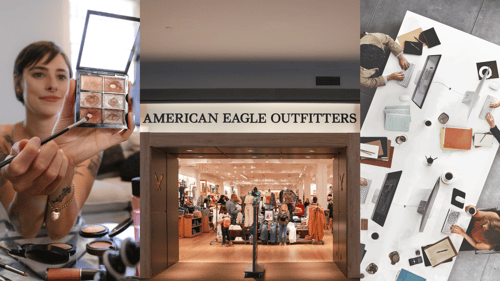
If there was any lingering question about what will define retail in 2026, consumers have answered it. RetailNext surveyed 1,053 nationally representative U.S. shoppers in February to understand how inflation, tariffs, AI, and changing habits are shaping decisions this year. The results are not subtle.
They want better prices. And they want them consistently.
READ THE FULL REPORT 👉 2026 US Shopper Sentiment Report
Price Isn’t A Lever. It’s The Strategy.
When we asked consumers what retailers should invest in this year, 71.3% chose lower prices. Not faster delivery. Not better experiences. Not richer loyalty perks. Lower prices.
That number is so dominant that it reframes the conversation entirely. Price is no longer one component of the experience. For most shoppers, price is the experience.
It shows up everywhere. 63.1% say better prices than online would most increase their in-store visits. And 33.9% say unfair or unpredictable pricing would make them stop shopping with a retailer altogether. That outranks poor product quality and bad service.
In 2026, price instability feels personal. Shoppers don’t see volatility as market mechanics. They see it as trust.
Tariffs Have Entered The Cart
Inflation remains the biggest macro factor influencing shopping decisions, cited by 45.7% of respondents. Job or income uncertainty follows at 16.8%. But what’s striking is the rise of tariff anxiety. 13% say tariffs will be the single most important factor shaping how they shop this year.
Two years ago, that number would have been close to zero in a consumer survey.
Consumers now anticipate future price increases and adjust behavior preemptively. They trade down. They delay purchases. They wait for promotions. They reduce impulse buys.
The 2026 shopper isn’t just reacting to today’s price. They’re hedging against tomorrow’s.
The Discount Habit Is Becoming Structural
Nearly 37.7% of consumers believe buying mostly during big promotions will become the new normal. That is not seasonal behavior. That’s structural change.
When asked which promotions they prefer, 55.9% chose straightforward price discounts. Loyalty rewards trailed at 19.8%, with other promotion types falling further behind.
If prices rise, consumers say they will switch to cheaper brands (24.3%) or wait for sales (24.1%) before anything else. Reducing impulse purchases (20.6%) and buying fewer non-essentials (20.3%) are close behind.
Retailers who rely heavily on major discount events should read that carefully. Promotional calendars train consumers. The more predictable the sale cycle, the more predictable the waiting behavior.
AI Is A Tool For Skeptics
Consumers are adopting AI. They’re just not trusting it.
29% expect AI-powered price comparison to become the new normal.
31.6% say they will never trust AI shopping recommendations.
Only 13.4% say they always trust them.
This creates a paradox. Shoppers will use AI, but they’ll use it to compare you against competitors, not to accept your suggestions. AI is becoming a verification tool. A price-checking engine.
If AI makes comparison frictionless, price gaps will be surfaced instantly.
On the influence front, the landscape is fragmented. YouTube influences 26.7% of shoppers, TikTok 26.2%, Facebook 25.5%, and Instagram trails at 15.6%. There is no single dominant digital gatekeeper. The shopper journey is diversified.
Physical Retail Survives On Fundamentals
The store is not disappearing. 34.5% of consumers plan to spend more online this year, while 34.1% plan to spend more in physical stores. Another 31.4% expect no meaningful change.
The split is almost perfectly balanced. So, what determines where dollars go? Price first.
When asked what would most increase store visits, 63.1% again pointed to better prices than online. Seeing items in stock and available immediately matters to 27.4% of shoppers, and 27.0% cite in-store-only deals or exclusives as a key confidence signal. Faster checkout influences 16.0%, and clear signage 16.9%.
Experience does have appeal. 63.8% say they are somewhat or much more likely to visit a store offering events, demos, or personalization. But that interest is conditional. Experience adds lift once price competitiveness is established. Without it, experience becomes something to browse rather than buy.
The 2026 Shopper Is Disciplined
What emerges from this research is not a fearful consumer, but a disciplined one.
They are price-focused, tariff-aware, promotion-trained, AI-enabled, and channel-agnostic. They are willing to use technology, but primarily to protect their wallet. They are open to experience, but not at a premium. They are watching closely for pricing fairness.
For retail leaders, this is not a year for abstract reinvention. It’s a year for operational clarity.
Price stability becomes brand strategy. Promotional discipline becomes margin strategy. AI must prove visible value before it earns influence. In-store experience must sit on top of reliable fundamentals, not substitute for them.
Consumers have made their priorities clear. Make it affordable. Make it predictable. Make it worth the trip.
Everything else is noise.
About the survey:
Fielded February 2026 via Centiment. n = 1,053 U.S. adults ages 18 to 64. Nationally representative across gender, age, income, and region. Margin of error ±3% at the 95% confidence level. RetailNext supports 500+ retailers across 100+ countries with physical retail analytics designed to navigate moments exactly like this one.
DOWNLOAD 👉 2026 US Shopper Sentiment Report